Wilmington, Vermont, looks like a postcard that hasn’t aged since the last century. You can’t drive through the southern part of the state without stopping. Maybe you’re drawn to the bustle that defies its size, or perhaps it’s the food. Locals and tourists alike line up at Dot’s Diner every morning. They order the blueberry pancakes. These aren’t standard flapjacks. They are an inch thick, drowning in local maple syrup. A few miles down Main Street, Al Wurzberger’s 1836 Country Store draws crowds. People leave with bags heavy with cheddar, fudge, and yes, cuckoo clocks. In summer, hanging baskets of flowers spill over the railings.
It is idyllic. It is peaceful. It is fragile.
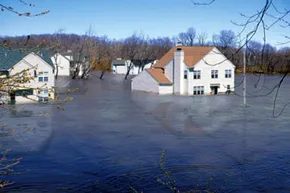
That fragility became painfully clear in August 2011. Hurricane Irene had transformed into a tropical storm. It pounded the region with relentless rain. The Deerfield River, usually a quiet, tree-lined backdrop, burst its banks. The water didn’t just rise. It raced downstream like a torrent. At Dot’s, situated just steps from the river, the water climbed to the second floor. That is not a small feat for a building. Stores and restaurants were left muddy and waterlogged.
Wilmington wasn’t the only victim. Across Vermont, flash floods treated houses like cordwood. Covered bridges, which had stood for centuries, became floating debris. When the waters finally receded, the cleanup began. And so did the realization that most homeowners were on their own. Standard policies did not cover this damage. Residents needed the National Flood Insurance Program (NFIP). Only 3,673 people in the entire state had bought in.
Understanding the NFIP Structure
The NFIP is run by the Federal Emergency Management Agency (FEMA). Its purpose is straightforward. It helps homeowners and renters rebuild after a flood. Most private insurance companies do not offer this coverage on their own. The risk is simply too high. The government subsidizes the program, but you still buy the policy through a private carrier.
Think of it this way. You have spring. You smell the crocuses. You start sneezing. It rains. It always rains. Runoff, winter melt, overflowing streams, ice-clogged rivers. It happens in Missouri, upstate New York, Connecticut, Iowa, or Vermont. When it pours, it is devastating.
Floods are the most common hazard in the United States. They cause billions in damage annually. Some form slowly. Others hit in a flash. Are you ready? Probably not. The Insurance Information Institute reported that in 2011, only 14 percent of U.S. homeowners had flood insurance. That was a slight increase from the previous year. Geography matters. Nineteen percent of policyholders live in the South. Thirteen percent are in the Midwest.
Standard Policies vs. Flood Events
Most homeowners believe their insurance covers all water damage. It doesn’t. Standard policies cover water from bursting pipes or broken faucets. They do not cover a river overflowing its banks. They do not cover surface water running into your home. This gap in coverage is exactly why Congress created the NFIP in 1968.
A standard flood insurance policy pays for “direct physical damage” to the structure itself. You must purchase a separate policy to protect the contents inside. The limits are capped. You can get up to $250,000 for the building. You can get up to $100,000 for your possessions. Renters can buy coverage too.
FEMA does not sell this directly. They work with private companies. The rates are set by the government. They do not change from one agent to another. The cost depends on what you need and how flood-prone your neighborhood is.
If your home has no basement, the average yearly premium is $520 for $100,000 in coverage. If you have a basement, that jumps to $615 a year. The numbers are small compared to the cost of rebuilding from mud.
The Claims Process
Filing a claim feels like filing a standard homeowners insurance claim. You notify the company. An adjuster surveys the damage. You then have to provide a “proof of loss” form. You have 60 days to submit this document.
Do you need this insurance? The answer isn’t always in a flood zone designation. It’s in the cost of starting over.

Bill sits at the end of the bar. He sips whatever is in his glass. He lives near the river. I know where I fish. The winter of 2010 to 2011 was brutal. Snow melted fast. Heavy rain followed. The river rose. It took his house.
He had flood insurance. It saved him. Repairs finished by October 2011. Then came Irene. The same storm that drowned Vermont hit again. Poor Bill. Flooded again. Now I see why he drinks. Flood insurance covered the second round too. He wants to sell now. I don’t blame him.
Before you buy flood insurance, you need to check eligibility. Nearly 20,000 US communities join the NFIP. Communities must enforce floodplain ordinances. FEMA checks that they follow the rules. If your town participates, you can buy it. High-risk zones included. Low-risk zones included. No participation? No insurance.
Checking Your Zone and Risk Level
FEMA has almost 100,000 maps. They show high-risk and moderate-to-low-risk areas. Bill already knew his risk. You might not. If you are in a high-risk zone, you likely need flood insurance if you have a federally-backed mortgage. The law requires it. Why?
Buildings in high-risk areas have a 26 percent chance of flood damage. This is over a 30-year mortgage term. That is a significant risk. Most homeowners ignore it until it hits. Bill didn’t.
Living in a moderate-to-low risk area changes nothing for the law. The government doesn’t require it. You should buy it anyway. FEMA says over 20 percent of NFIP claims come from outside high-risk zones. Water doesn’t read maps. It just flows.
You can get up to $200,000 in coverage. This protects the structure and your belongings. Costs vary. A basement adds $40 a year. Expect around $405 annually with a basement. $365 without one. Even if you live on a hill, get flood insurance. Mudflows happen. They damage hillside homes. Coverage includes that.
Safety Tips and Claims Process
The safety tip is simple. Never assume you are safe. Just because you haven’t flooded doesn’t mean you won’t. Hurricanes cause floods. Levees fail. Drainage systems clog. Rapid rainfall creates flash floods. All of these are covered.
Ask Bill. Ask the people of Vermont.
How Flood Insurance Works
A standard policy pays for direct physical damage to your home. It is available to those in flood-prone areas. Note that standard homeowners policies usually cover burst pipes or broken faucets. They do not cover flooding.
Property owners need separate policies for their possessions. Standard policies do not protect against river overflow or surface water running into the house. Congress created the NFIP in 1968 for this exact reason. To help people rebuild.
Filing a claim works like a regular homeowners claim. An adjuster surveys the damage. You must submit a “proof of loss” form. You have 60 days to submit it. Don’t miss that deadline.
FEMA does not sell flood insurance directly. Private companies sell it. FEMA works with them. The government sets the rates. Rates are the same across all companies and agents. You can shop around, but the price for the same coverage will not differ.
Average costs help with budgeting. $520 a year gets you $100,000 in coverage for a home without a basement. $615 a year covers a home with a basement. Those are averages. Your specific rate depends on location and elevation.
Bill is selling his house. I hope he finds a dry spot. The weather is changing. The maps are shifting. Make sure your coverage keeps up.