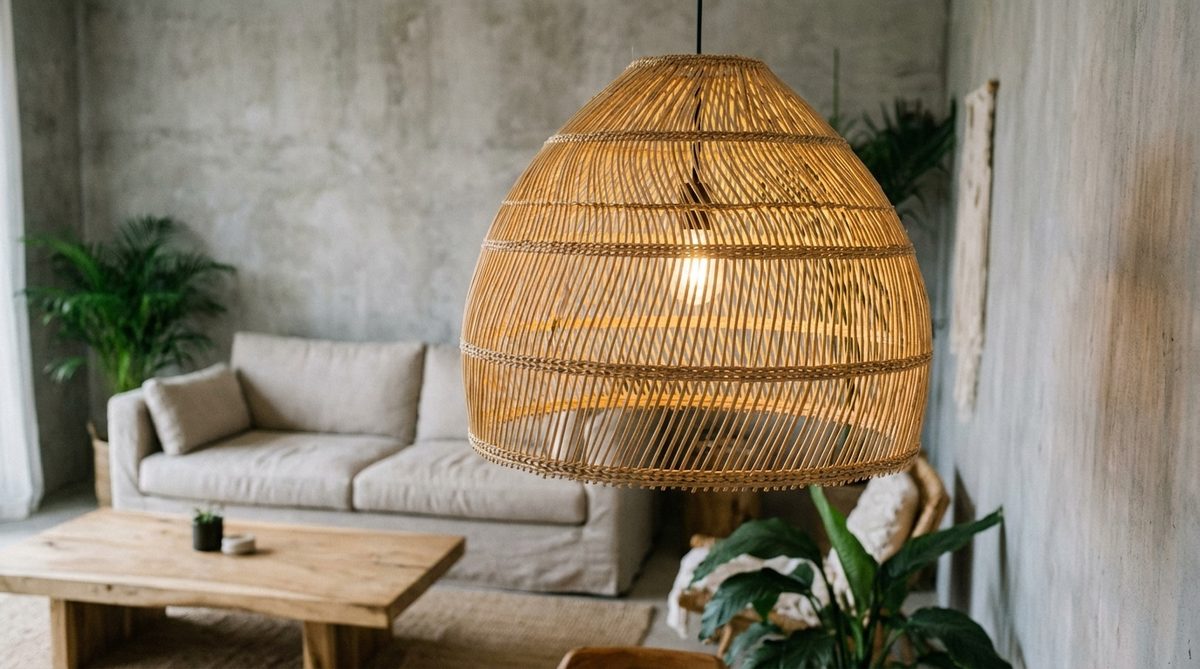
The hanging woven light fixture has spent years as the crown jewel of boho-chic decor. It’s everywhere. You see it in living rooms, boutique stores, and Instagram feeds. But let’s be honest. It’s tired.
This spring, interiors are shifting. We’re moving away from fast decor and mass-produced items. The goal is authenticity. We want timeless design that lasts. Not just something that looks good for a season.
The heart of a home still needs warmth. But now, lighting is an art piece. It demands thought.
If you are wondering what is replacing the ubiquitous rattan pendant, look up. The answer is subtle. It’s sophisticated. And it’s already here.
The End of the Bohemian Era
Why Natural Weaving Lost Its Exclusivity
You couldn’t escape the natural weave recently. It was on every ceiling. From family homes to trendy shop fronts. This ubiquity killed its charm.
What started as an exotic, refined accent became a standard of quick decor. The visual uniformity is suffocating. We want to stand out. We want to slow down.
We crave objects with a soul. Decor that doesn’t look like everything else on social media. Peace comes from unique choices. Not replicated trends.
The Need for a Sophisticated Aesthetic
Spring marks a pivot. We are embracing slow life. We want durable elegance.
Living spaces need presence. They need shine. They need sharper lines.
The rustic look of woven fibers clashes with modern furniture. It doesn’t fit sleek upholstery or refined finishes. We need lighting that elevates the space. Chic, not cheap-looking.
The secret is choosing timeless materials. Ones that catch the eye by day and by night. Without blowing the budget.
The Real Revelation: Glass and Ceramic Take Over
The Alluring Light Play of Tinted Glass
Here is the first big shift of the season: tinted glass.
Amber. Olive green. Smoky gray. Deep blue. This material is back.
Unlike natural fibers, which often cast uneven shadows, glass diffuses light evenly. It’s warm. Homogeneous. Extremely chic.
The changing reflections throughout the day add poetry to a room. You don’t need a massive budget. A well-sourced glass globe transforms a living room instantly. It feels retro. It feels current.
The Brutal Charm of Hand-Molded Ceramic
The second alternative is taking over: artisanal ceramic.
Brutal. Textured. Imperfect.
Baked clay. Glazed stoneware. This material represents ethical, reasoned consumption.
A ceramic pendant isn’t just a lamp. It’s a suspended sculpture. It anchors decor in rare authenticity. It honors manual labor. It uses materials pulled from the earth.
These pieces last a lifetime. They fit perfectly in rooms with organic tones, solid wood, and plush textiles.
How to Choose Your Next Pendant
So, which material fits your space?
If you want soft, diffused light with a touch of color, go for tinted glass. It’s versatile. It works in modern and vintage settings.
If you want texture and weight, choose ceramic. It adds visual weight to a room. It grounds the space.
Consider your existing decor. Do you have lots of soft textures? Add hard ceramic. Is your room sparse? Try colored glass for a pop of light.
Maintenance and Longevity
Glass needs cleaning. Dust settles on clear and tinted surfaces. A simple wipe-down keeps it glowing.
Ceramic is durable but fragile. Handle with care during installation. Once hung, it needs little maintenance. Just avoid harsh chemicals.
Final Thoughts
The boho era is fading. Not because it was bad. But because we crave more depth.
We want lights that act as art. Not just decor.
Glass and ceramic offer that depth. They bring texture. They bring history.
Your ceiling is a canvas. What are you painting on it?
You want those small, luminous details to work harder. Not the big boho chandeliers that used to hog ceiling space. Glass and ceramic are different. They play with volume instead of fighting it.
Installation needs a bit of care to get the aesthetic right. You are not just hanging a light. You are framing the room.
Finding the right height for your space
Harmony starts with measurement. If you place a light in a walkway, keep it higher. About two meters from the floor keeps heads safe and sightlines clear.
Where do you drop it lower? Above a coffee table. Aim for 1.60 meters. This structures the seating area. It creates an intimate zone for conversation.
You can also mix heights. Use multiple small glass pendants. Stagger them. The result is a spectacular light cluster that looks expensive but doesn’t have to be. The goal is simple. Highlight the architecture without blocking the path you take every day. No heavy renovations required.
Finishing touches for a chic transition
Moving away from purely botanical styles means adjusting the surrounding decor. Smooth or sculpted materials need complementary textures.
Tinted glass pairs beautifully with brushed brass. Matte black metal also works well for a modern look. If you choose ceramic, soften the edges.
Add crumpled linen curtains. Bring in thick rugs with soft tones. These small changes create harmony. Your living room becomes a family cocoon. It stays calming and stylish. It feels rooted in a slower, higher-quality lifestyle.
Why this material shift matters
Trading out a traditional open-weave pendant for tinted glass changes the mood. Ceramic adds raw character. You redefine the atmosphere with surprising simplicity.
These materials are durable. They have presence. They offer a new way to look at our interiors. The light becomes part of the design, not just an add-on.
So, which material calls to you? Glass or ceramic? Pick one to bring timeless elegance to your evening gatherings.