
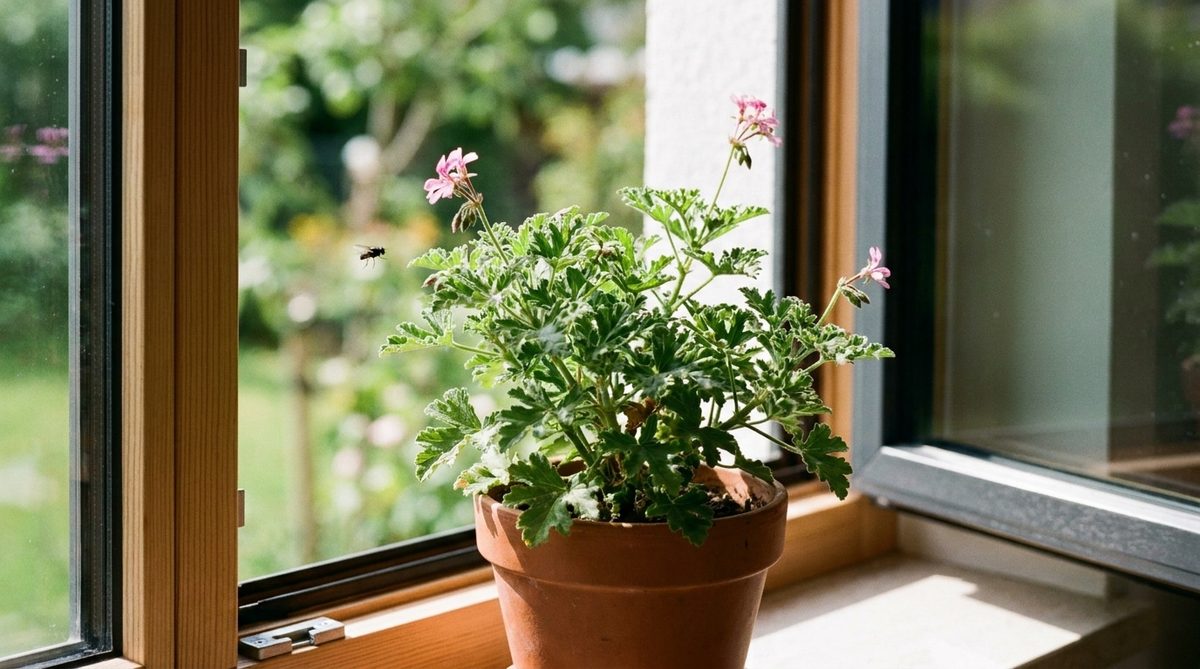
The weather is warming up. You want to open the windows. You get the fresh air. You also get the bugs. It is a trade-off most homeowners hate. Flies and gnats invade kitchens the moment the sun stays out past sunset. They swarm around food. They buzz over countertops. It ruins the vibe of a summer lunch.
Chemical sprays feel like a bad idea. They smell like poison. They leave residues on surfaces where you chop vegetables. Plus, they look ugly in a well-decorated home. You need a solution that works but doesn’t look like a pest control operation.
There is a plant that acts as a natural barrier. It is not just decorative. It is functional. It is the scented geranium, or Pelargonium graveolens.
Why Synthetic Sprays Fail
Most people reach for aerosol sprays or plug-in repellents first. These products rely on synthetic pyrethroids. They kill on contact. They do not prevent entry. The smell lingers for days. It clashes with the aroma of cooking. It feels industrial in a space meant for relaxation and family meals.
You want a barrier, not a massacre. You want something that fits your decor. You want something that does not require a respirator to use.
The Scented Geranium Solution
Place a potted scented geranium on a sunny windowsill. This is the primary defense line. The plant thrives in light. It grows quickly. Its presence is elegant. The leaves are textured. They look good in ceramic pots or rustic terracotta.
But the real function is olfactory. The leaves contain essential oils. When disturbed, these oils are released into the air. The scent is potent. It varies by variety. Some smell like citrus. Others evoke rose or peppermint. To humans, the smell is pleasant. To flying insects, it is a warning signal.
How It Works as a Repellent
The oils in the leaves act as a natural deterrent. Mites and flies avoid the area. They cannot stand the concentrated aroma. The plant creates an invisible shield. It is not a magic wand. You will still see the occasional fly. But the population remains manageable.
Crucially, you must interact with the plant. The oils are stored within the leaf structure. They are not constantly diffused into the air at high volumes. You need to release them.
Practical Application
- Placement : Put the pot where the air flows. Near the window is best. This ensures the scent spreads into the room rather than staying in the pot.
- Maintenance : Water the plant regularly. Dry soil stresses the plant. Stressed plants produce less potent oil.
- Activation : Gently brush your fingers against the leaves. Do this once a day. The physical disturbance triggers the release of the volatile compounds. This boosts the repellent effect.
Varieties to Choose
Not all scented geraniums are equal. Some are better repellents than others. Look for specific scent profiles.
- Citronella : Strongest deterrent for flies.
- Rose : Smells nice to humans, effective barrier.
- Peppermint : Sharp scent that bugs dislike.
Choose based on your aesthetic preference. All of them work. The mechanism is the same. The plant chemistry repels the pests.
Limitations
This is not a silver bullet. If you have a severe infestation, you may need additional measures. Food must be covered. Counters wiped clean. But for general prevention, the plant is effective. It is safe for pets. It is safe for humans. It adds greenery to your space.
The kitchen becomes a place of comfort again. You eat without swatting. The air smells like a garden, not chemicals. It is a simple shift in strategy.
You get the light. You keep the peace. The bugs stay outside. Or at least, they stay away from your plate.
It is not complicated. It is just biology. And aesthetics.
What about the rest of the house? The strategy changes in the bedroom. The window screens need checking. But that is a different project.
For now, touch the leaves. Let the scent rise. Watch the flies hover and then turn away. It works.
There is a specific kind of peace that comes from opening a window in July without reaching for the spray. No swatting. No chemical haze. Just a breeze that actually smells like home.
This isn’t about buying expensive gadgets or installing high-tech traps. It’s about a single, well-placed plant. A scented geranium on the window sill.
It’s low cost. It’s effective. And it turns your living space into a sanctuary rather than a bug hotel.
How to Care for Your Natural Mosquito Repellent
You don’t need a green thumb to keep this plant alive and working. Geraniums are tough. They are practically designed for people who forget to water things. But if you want them to produce the essential oils that keep insects at bay, you need to follow a few basic rules.
1. Light is non-negotiable
Place the pot where the sun hits hardest. A south-facing window is ideal. The more light it gets, the stronger the scent. Weak light means weak oils. Weak oils mean bugs win.
2. Water sparingly
Overwatering kills geraniums faster than drought does. Wait until the top layer of soil is completely dry. Stick your finger in. If it feels damp, walk away. You are trying to avoid root rot, not create a swamp.
3. Prune for density
Pinch back the tips of new shoots. It sounds counterintuitive to cut a plant to make it grow, but it forces the bush to branch out. More branches mean more leaves. More leaves mean more scent. It also keeps the plant from looking leggy and sad.
4. Deadhead regularly
Remove spent flowers. It keeps the plant looking tidy and encourages new blooms. A clean plant is a happy plant. A happy plant works harder.
Use simple materials. Terracotta pots breathe. They help regulate moisture better than plastic. Pair the plant with natural textures like linen curtains or wooden frames. The aesthetic matters as much as the function.
Why This Beats Chemical Repellents
We live in an age where we try to engineer our way out of discomfort. Bug zappers. Plug-in diffusers. Heavy curtains sealed with tape.
It’s exhausting.
A geranium on the windowsill changes the dynamic. You aren’t hiding from the outdoors. You are inviting it in.
Open the windows. Let the summer air flow through. The plant does the heavy lifting.
This is slow living in its most practical form. It’s not just decoration. It’s a system. A low-maintenance, high-reward system.
You get beauty. You get a quieter mind. You get a home that feels like a refuge again.
The question isn’t whether it works. It’s why you haven’t tried it yet.