Your grandmother’s attic might be sitting on a small fortune. Those old copper cake molds, often relegated to cardboard boxes for decades, are suddenly in high demand among antique dealers and brokers. The price range is clear: between €40 and €200, depending on the condition, patina, and age of the piece. What was yesterday a mundane kitchen utensil is today a collectible object in its own right.
Here is what you need to know right now.
- Why Parisian antique dealers are suddenly interested in grandmother’s molds
- A critical detail to check before you clean your molds
- How the vintage kitchen trend has breathed new life into these forgotten objects
From Daily Use to Collectible Asset
Copper has traveled through the ages, from royal tables to medieval soups and Renaissance stews, and it still presides over the kitchens of the world’s greatest chefs. But copper baking molds? They hit their golden age in the 19th century. French bourgeoisie equipped themselves with tin-lined copper cookware, often crafted by specialized metalworkers. At that time, Villedieu alone had a hundred workshops specializing in red metal work. Molds for kouglofs, savarins, or even fish shapes rolled out by the dozens, numbered, and sometimes stamped with the maker’s name.
This artisanal care is precisely what makes them valuable today. Signed 19th-century molds from Samain, featuring a castle mark under a crown, can fetch up to €260 for a pair with certain online antique dealers. A mold without a signature negotiates around €200, provided the inner tin lining is intact and the patina is sharp. The deciding factor isn’t just the beauty of the metal; it’s authenticity.
What Dealers Look For Before Buying
In food-related copperware, like stockpots and saucepans, items are tin-lined to prevent direct contact between food and the metal. This tin deposit eventually wears down, and a tinner can retin the object by covering it with a fresh layer of tin. A mold with its original tin lining still visible—even partially—is worth significantly more than a reworked piece. Authenticity trumps visual perfection. Antique dealers know this and examine it first.
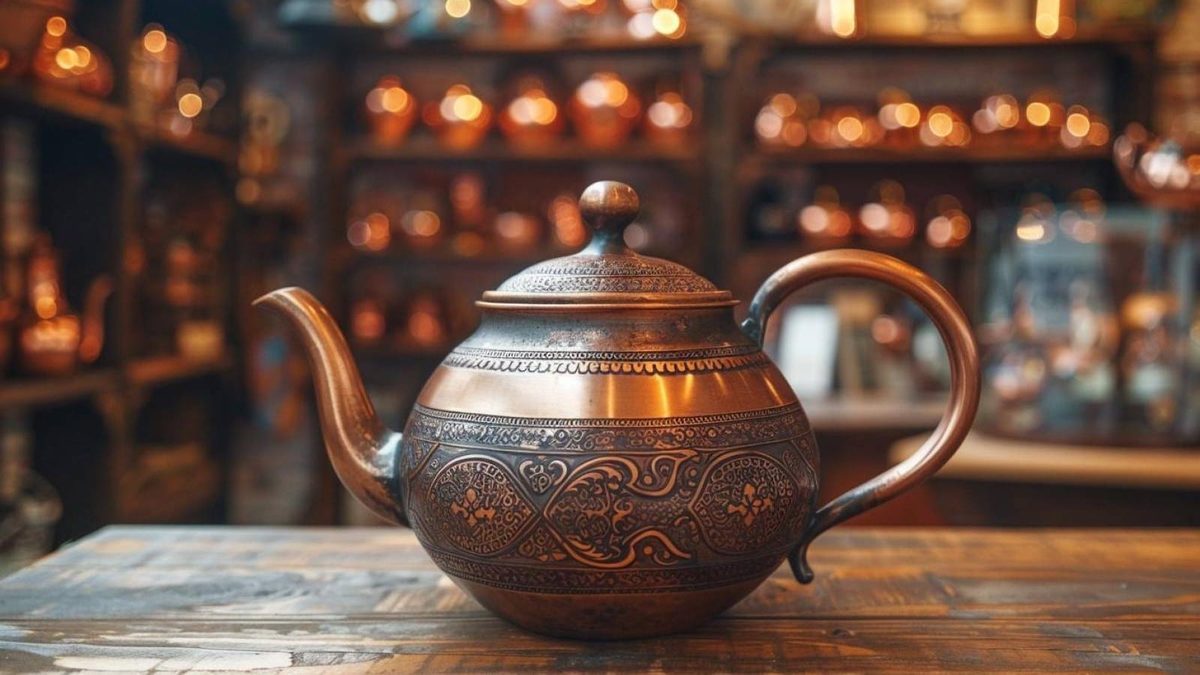
Then there is the patina. The warm glow of patinated copper and the spiral silhouette of a traditional Alsatian mold instantly give it the soul of a family home. Equipped with its original hanging ring, this type of mold is not just a simple utensil; it is a strong decorative piece that catches the light and celebrates the art de vivre of the past. A piece that has been rubbed too much, polished too bright, loses part of its interest. The patina, that golden-brown discoloration achieved through years of cooking, is something you cannot manufacture.
Shapes also play a huge role in pricing. A hexagonal tower mold with cigar-shaped sides is offered at €180 by some specialized antique dealers, just like a 19th-century round copper tin-lined mold. Unusual models, shaped like fish, stars, or head brioche, systematically command a premium over standard round shapes.
The Vintage Kitchen Trend Drives the Market
Vintage kitchens are having a moment, both across the Atlantic and in the UK, and on social media. You see accessories like copper gelatin molds hanging on walls, patinated pots and pans displayed on open shelves, or copper lamps and handles that add character to the space. This movement is not trivial; it represents a real break from catalog kitchens that are smooth and history-less.
This trend marks a return to authenticity, warmth, and craftsmanship, breaking away from ultra-modern and standardized kitchens. The copper mold fits perfectly into this logic. Copper is a “warm” material that creates a beautiful contrast with dark furniture or cold materials like polished concrete. It adds the necessary touch of warmth to make a modern kitchen more welcoming. The result? Pieces that slept for thirty years in boxes are now featured prominently in interior photos posted on social networks.
Once a pillar in the preparation of family kouglofs, the mold is now transforming into a characterful decorative object. It suits a country kitchen, a vacation home, or a contemporary interior seeking to break away from industrial uniformity. This double life—functional object and decor piece—explains in large part why the demand does not weaken.
How to Estimate and Sell Yours
Before contacting an antique dealer, a few simple steps. Turn the mold over: if it is numbered or stamped with a manufacturer’s mark, its value jumps. Numbered molds, like a kouglof bearing the number 40, with a time patina and small dents, represent authentic period pieces appreciated by collectors. A number is often a sign of professional manufacturing for a grande maison or a castle.
Do not clean anything before expertise. It is the most common and costly mistake. A swipe with an abrasive product can erase a patina built up over a century in minutes. Dealers on Leboncoin and eBay know this: a rare lot of six mini copper cake molds with time patina (inside and out) sells for €53, while a single large, well-preserved mold can reach €135 each on the same platform.
The market is moving fast. If you have something with a mark, or a shape that isn’t a simple circle, hold onto it. Clean it gently with just a dry cloth if you must. But leave the polishing cloths and chemical cleaners in the drawer. The value lies in the history on the surface, not in a mirror finish.
Where to Sell Your Best Antiques for Top Dollar
If you have pieces with serious provenance, general marketplaces rarely cut it. You need the specialists. Sites like Proantic and Antikeo cater to professional antiquarians. These platforms connect you with a highly targeted audience. Buyers here know what they want. They are ready to pay the true market value.
Selling directly to a local antique dealer is different. It is faster. But it costs you. Expect roughly half the final retail price. Still, for an item you were about to trash, that instant cash is often quite honorable. It cuts out the middleman hassle, even if the margin is thinner.
The Normandy Connection: Dinanderie and Rare Molds
The tradition of dinanderie — the art of working copper and brass — runs deep in France. It has been rooted here for centuries. The heart of this craft beats in Villedieu-les-Poêles in Normandy. This town is the undisputed capital of French dinanderie.
But the value isn’t just in the finished pots and pans. Look at the tools. Some ancient molds from these Norman workshops, or other regional manufactories, hold significant weight. They interest museums. They attract specialized collectors.
A rare mold can easily fetch over 200 euros.
This is not a guarantee. It is a concrete possibility. Before you clean out the attic with reckless abandon, pause. Check the base of your items. Look for maker’s marks or mold details. You might be sitting on a piece of industrial history worth far more than scrap metal.