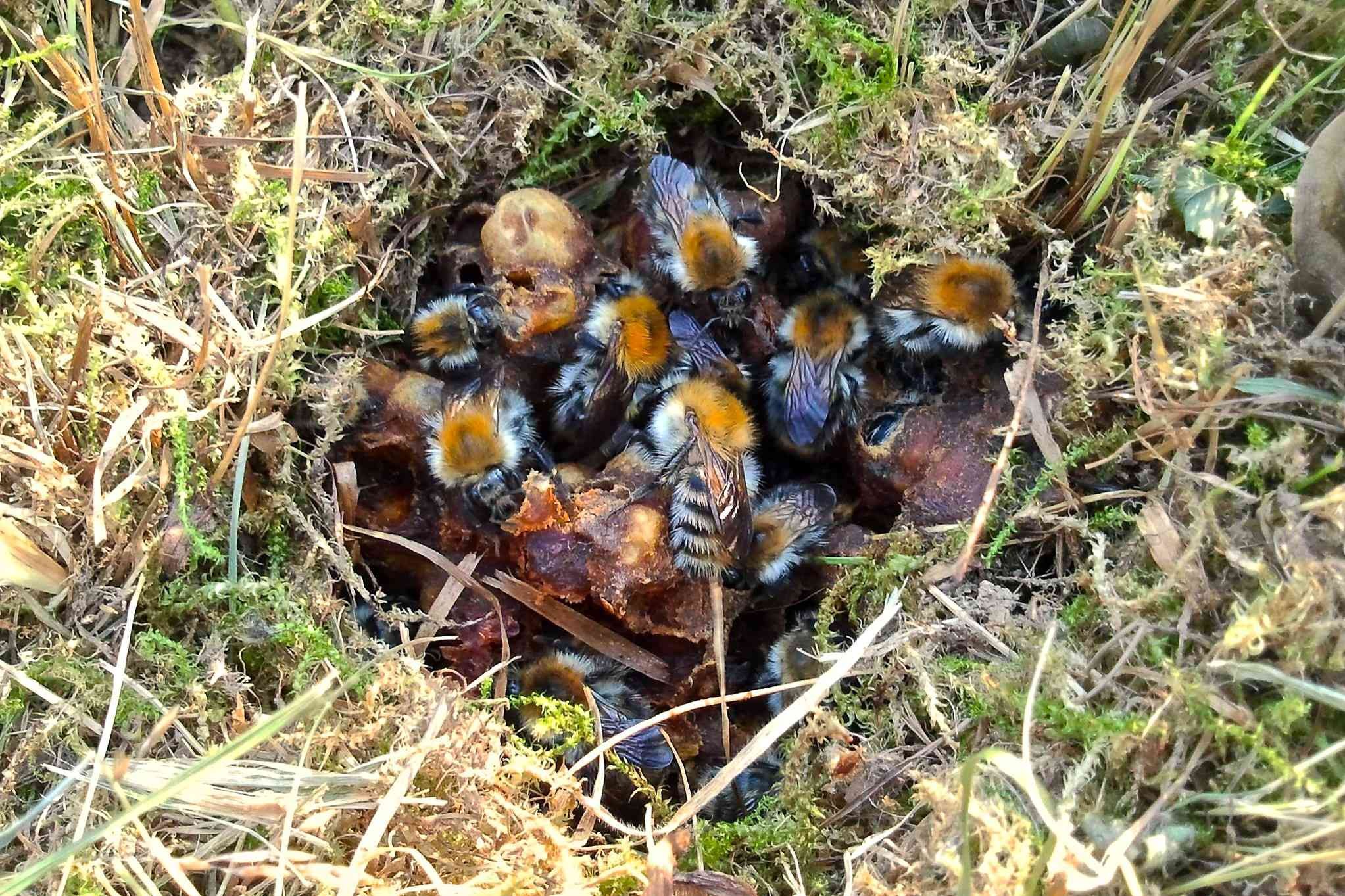
Ground bees are pollinators. They are also annoying when they choose your front lawn for their real estate projects.
You do not want to get stung. But you also probably do not want to spray pesticide everywhere. It is a dilemma. Most of the time? Leave them be.
But if they are ruining your day, you have options. Let’s look at the signs first, then the fixes. Some are gentle. Some are lethal. Choose wisely.
Spotting the Culprit
How do you know if ground bees are moving in?
- Little dirt piles. These are the smoking gun. When they dig, soil comes out. It piles up right at the entrance. You might miss the bee, but you won’t miss the mound.
- Low-flying traffic. Bees usually zip through the air. Ground bees stick to the turf. If you see buzzers hovering inches off the grass, pay attention.
- Holes with activity. Combine the dirt piles and the low flight. If bees are diving into small holes in the soil, they are nesting there. That is your cue.
Fixing the Problem (8 Ways)
There is no single right answer. There are methods. Some keep the bees away. Others kill them. Here is the breakdown.
1. Fix bare spots
Bees want easy dirt. Grass is hard work for them. Bare earth is an open invitation. If your lawn has bald patches, seed them. Now. Not later. Dense grass is a barrier.
2. Keep it wet
Dry soil digs easy. Wet soil is a nightmare. Water your lawn. Keep the topsoil damp. It makes nest construction miserable for them.
3. Mulch the garden
Gardens are worse than lawns. No grass. Loose, worked soil. Bees love it. Cover it up. A thick layer of mulch stops them from digging in. It is simple physical blockade.
4. Block the shrub beds
Mulch works here too, but landscape fabric is better. Lay it down under your shrubs. It separates the bees from the soil they want. No access, no nest.
5. Drown the larvae
This is not for the faint of heart. If you are willing to end the colony, this works.
Boil water. Mix in soap. Pour it down the active holes.
It sounds brutal. It is. It drowns the larvae underground. The colony won’t survive into next spring.
6. Cap the holes
Find the entrance. Cover it with something heavy. A flat stone. A brick. Anything substantial.
The bees try to get in. They fail. They get frustrated. They usually move on. It is a psychological deterrent.
7. Smell it away
Bees hate cinnamon. Just like many of us.
Sprinkle cinnamon powder near the holes. It repels them. They prefer their scent to yours. Maybe they leave. Results vary.
8. Pay someone
If you hate DIY. If the previous steps failed. If you just want it done.
Hire a pro. They have tools. They know the species. They guarantee results. It costs money, but it saves sanity.
Which way do you go? The gentle route? The soap route? Or do you just let the bees have their little dirt forts?
Your yard. Your call. 🐝