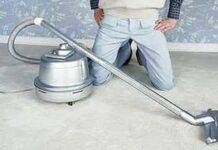
Stop dragging that dusty relic across your floors. If you are still wrestling with an ancient canister model from the last century, it is time to upgrade. Suction power matters, sure. But modern cleaning requires more than just sucking up dirt. You want efficiency. You want clean air. You want a machine that does not require a PhD to operate.
Today’s vacuums do more than just hunt down cat hair trapped in shag carpet. They are smarter. They are cleaner. And they are designed for human hands, not just industrial warehouses. Here are the features that actually matter when you are standing in the store aisle.
The Retractable Power Cord: A Small Mercy
It sounds trivial. Until you have to coil a 25-foot cord around a hook. Again.
A retractable power cord is a small innovation that saves your sanity. You tug it out. It extends. You push the button. It retracts into the body. No kinks. No tangling under the beater brush. It is as satisfying as a dog finally stopping its bark on command.
Do not expect this on every model. It is far more common on canister vacuums than uprights. If you want true versatility, ignore the 20-foot standard. Look for models with a 30-foot retractable cord. That extra length lets you clean the entire hallway and slip into the small bedroom without hunting for a different outlet. One plug. Full coverage.
The Backpack Vac: Mobility or Madness?
If you think carrying your tools in a backpack is peak efficiency, consider the backpack vacuum. These units strap to your torso. They lift the weight off your arm.
They were built for commercial use. Janitors. Hotel staff. People who clean thousands of square feet a day. But for homeowners? They offer incredible mobility. Your hands are free. You can reach high corners and low crevices without twisting your spine.
There is a downside. You are carrying the weight. It helps develop upper body strength. If you want to get fit while you clean, this is your machine. If you hate wearing heavy gear on your back, skip it.
Bagless Vacuuming: The Hidden Cost
Bagless technology started in light-duty stick vacuums. Now, high-end models use it for big jobs. Living room carpets. The “man cave.” Heavy debris.
The appeal is obvious. No bags to buy. Lower operating costs.
Is it really cheaper? Deceptive much?
In a standard vacuum with a bag, the bag is the filter. Dusty air passes through the fabric. The dust stays. Clean air goes back into the room.
Bagless vacuums have no bag. They have an onboard filter. You must replace this filter periodically. The schedule varies by model. But it is less frequent than changing a full bag.
The real issue is dumping. You can see exactly how much junk you collected. That visual feedback is nice. But when you open the bin, you are unleashing a cloud of debris. If you have asthma, you will hate this. If you love going bagless, you must master the “dumping technique.” It involves a specific wrist flick. A sharp snap. Launch the dirt into the trash before the cloud expands.
“With a bagless vacuum, easy access has its drawbacks. Dumping the receptacle can release a toxic cloud of debris that would make Pig-Pin blush.”
Robotics: The Hands-Free Future
We are still talking about traditional vacuums. But the landscape is shifting. You cannot ignore robotics anymore.
Robot vacuums have moved from novelty to necessity. They map your home. They clean on a schedule. You set it and forget it.
But are they enough? Not for deep cleaning. Not for embedded dirt. They are a maintenance tool. A daily keeper of the surface. For the heavy lifting, you still need a human-operated machine. Or do you?
The line is blurring. Modern robot vacuums now have self-emptying bases. They lift their own dust. They wash their own mops. The technology is advancing rapidly.
This is just the beginning. The next section will cover suction power and filtration systems. But for now, look at your current machine. Does it have a retractable cord? Is it bagless? Does it sit in a corner, waiting for you to drag it out?
If the answer is yes to all three, you are already behind the curve.
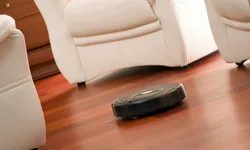
Robotic vacuums get a lot of hype. They navigate around chair legs and toddlers with what feels like sentient grace. Some even have schedules. You can set a timer and forget about it until the battery dies. If your couch is high enough, they slide underneath. That’s a feature most humans skip during a deep clean anyway.
They don’t take breaks. No coffee. No phone calls. It might take an hour to clean a medium room. You aren’t paying overtime.
There’s a catch though. Consumer Reports notes they struggle in corners. Baseboards are a weak spot. They’re also pricey for light-duty work. You’ll need to clear the floor of cords and rugs. If you do the prep work, they handle daily maintenance well. Surface dirt gets pulled before it embeds in carpet fibers.
Is HEPA Filtration Actually Necessary?
Standard bagged vacuums use the bag as a filter. You see the dust on the outside after use. Proof that particles are escaping. Back into the air. Mites. Mold. If anyone in your house has asthma, this is a health risk.
Onboard filtration changes the game. HEPA is the gold standard, but it’s not the only option. Water filtration exists. Electrostatic precipitation is another method. Some newer models even use UV light. That kills microbes and cuts down on odors.
HEPA stands for High-Efficiency Particulate Air. The filter traps 99.97% of particles that are 0.3 microns or larger. That is the “A” standard. But not all vacuums meet it. Some brands use similar-looking filters that don’t actually qualify. Air can bypass the filter in poorly sealed models.
If air quality matters to you, don’t trust the showroom demo. Check independent lab reviews. A good filter isn’t something you can tell by looking at the unit.
A Bit of History
HEPA filters didn’t start in appliance stores. They were developed in the 1940s. The goal was to stop radioactive dust. It kept fallout out of nuclear test site bomb shelters.
Understanding Cyclonic Technology
Dyson claims to have invented cyclonic technology thirty years ago. It’s a revolutionary approach to floor cleaning. Now, lots of brands use it. Some do it better than others.
Consumer Reports has rated these models. They give each one a score out of 100. Every system has pros and cons. Do your research before you buy one. The technology is mature now. It’s about finding the right execution for your floor type.