

You don’t have to live in a monotonous sprawl to spot the signs. Look closely at any American suburb from the mid-20th century and you’ll see them. Rows of identical homes. Matching roofs. Symmetrical windows. It’s not an accident. It’s a system.
We call them cookie-cutter neighborhoods, but in real estate, they’re known as tract housing. The term sounds dismissive, like something you’d find in a bargain bin. But the logic behind them is undeniable. After World War II, the United States faced a crisis. Millions of GIs returned home. They had jobs. They had savings. They wanted houses. The housing market didn’t.
Pre-war homes were expensive and often in city centers. The returning workforce was blue-collar, middle-class, and ready to buy. But there weren’t enough houses. By the end of 1945, the country needed five million new residences. The market couldn’t keep up. It simply didn’t have the capacity to build custom homes for millions of families overnight.
What was needed was speed. Scale. And a new way of thinking about construction.
Enter Levitt and Sons.
William Levitt, a decorated naval officer returning from the war, saw the problem clearly. He also saw an opportunity. His company owned 6,000 acres of abandoned potato fields on Long Island. It was far from the city. It was flat. It was perfect. The plan was bold: build thousands of small, affordable homes on large tracts of land. He wasn’t building houses one by one. He was manufacturing a community.
In May 1947, Levitt and Sons announced they would build 2,000 rental units. The response was immediate. Within two days, a thousand homes were rented. Demand outpaced supply before construction even finished. By 1948, the crew was building thirty houses a day. The assembly-line method worked.
The model evolved quickly. By 1949, Levitt shifted from rentals to sales. The homes got slightly larger. They were still manufactured identically. But now, families could own their slice of the American Dream. By 1951, almost 17,500 homes stood in what became known as Levittown. It was the first true cookie-cutter neighborhood. And it changed American housing forever.
How Tract Housing Changed Suburban Design
The appeal of cookie-cutter houses wasn’t just about cheap materials. It was about predictability. For a young family in the 1950s, buying a home was risky. You didn’t know if you could afford the upkeep. You didn’t know if the neighborhood would stay stable. Tract housing solved that.
These homes were built on small lots. The floor plans were repetitive. The exterior materials were uniform. But that repetition created a sense of order. And order was what the post-war era craved.
Levittown wasn’t the only example. Other developers copied the model. The success of this approach influenced both suburban and urban developments. It proved that affordable housing could be produced at scale without sacrificing basic living standards.
Today, we critique these neighborhoods for their lack of character. We complain about the identical lawns. The matching mailboxes. The endless rows of siding. But we forget why they existed. They were a response to a desperate need. A way to house millions of people when the system was failing.
So next time you drive through a suburban development and see row after row of the same house, remember Levitt. Remember the potato fields. Remember the thirty houses built in a single day.
It wasn’t laziness. It was engineering.
The success of the tract housing model proved that affordable, mass-produced homes could meet a massive societal demand, fundamentally reshaping how Americans viewed homeownership.
This method didn’t just build houses. It built a lifestyle. One that prioritized convenience, affordability, and uniformity. And while we may prefer unique homes today, the foundation of modern suburban life was laid by developers who understood one thing: speed sells.
But how did they actually build them so fast? And what materials made them so cheap? That’s where the real engineering begins. And it involves more than just wood and nails.
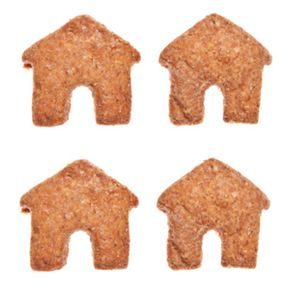
The secret to those perfectly identical little boxes isn’t magic. It’s volume.
Buying in bulk is the American way. Creating ten identical houses is significantly cheaper than creating ten unique ones. Predictable material needs mean less waste. Larger orders unlock bigger discounts. Those savings ostensibly trickle down to the homeowner.
But there’s a darker efficiency at play.
The Assembly Line Model
The Levitts didn’t just build houses. They built a system. They looked at the Ford assembly line. They saw streamlined manufacturing. They saw repetitive construction. And they decided it could work for residential building.
Each worker got one specific task.
They moved from house to house completing that single job.
This model served two purposes. It avoided labor unions. Developers hired general workers. They trained them specifically for one repetitive motion. It also guarded against high turnover. No single person held too much “institutional knowledge.” No worker was more valuable than the next.
If one guy quit, the next one took his place. The line kept moving.
Vertical Integration and Uniformity
There’s another reason developers love cookie-cutter homes.
Many firms either own or partner with specific supply companies. Windows come from one place. Doors from another. Everything is predictable.
But the Levitts went further.
They actually bought the subsidiary companies. They owned the lumber yard. They owned the nail factory.
Why? To avoid messy things like strikes. And again, unions.
This business move contributed to the utter uniformity of the houses. There was literally not a nail’s difference in each Levittown home.
From Suburbs to Inner Cities
If cookie-cutter neighborhoods exist today, it’s because the Levitt and Sons practices worked.
The houses are made quickly. Cheaply. Abundantly.
It was once delegated to the suburbs. Now it’s used to make affordable inner-city housing. Low-income and mixed-income homes still rely on these methods.
FAQ
How do cookie-cutter neighborhoods impact community interaction?
Cookie-cutter neighborhoods often feature similar layouts and shared spaces that can foster a sense of community and make social interactions more frequent among residents.
What are the long-term urban planning considerations for cookie-cutter neighborhoods?
Long-term planning for cookie-cutter neighborhoods needs to address potential issues like uniformity, which can lead to aesthetic fatigue, and the need for future redevelopment to accommodate diverse community needs.