
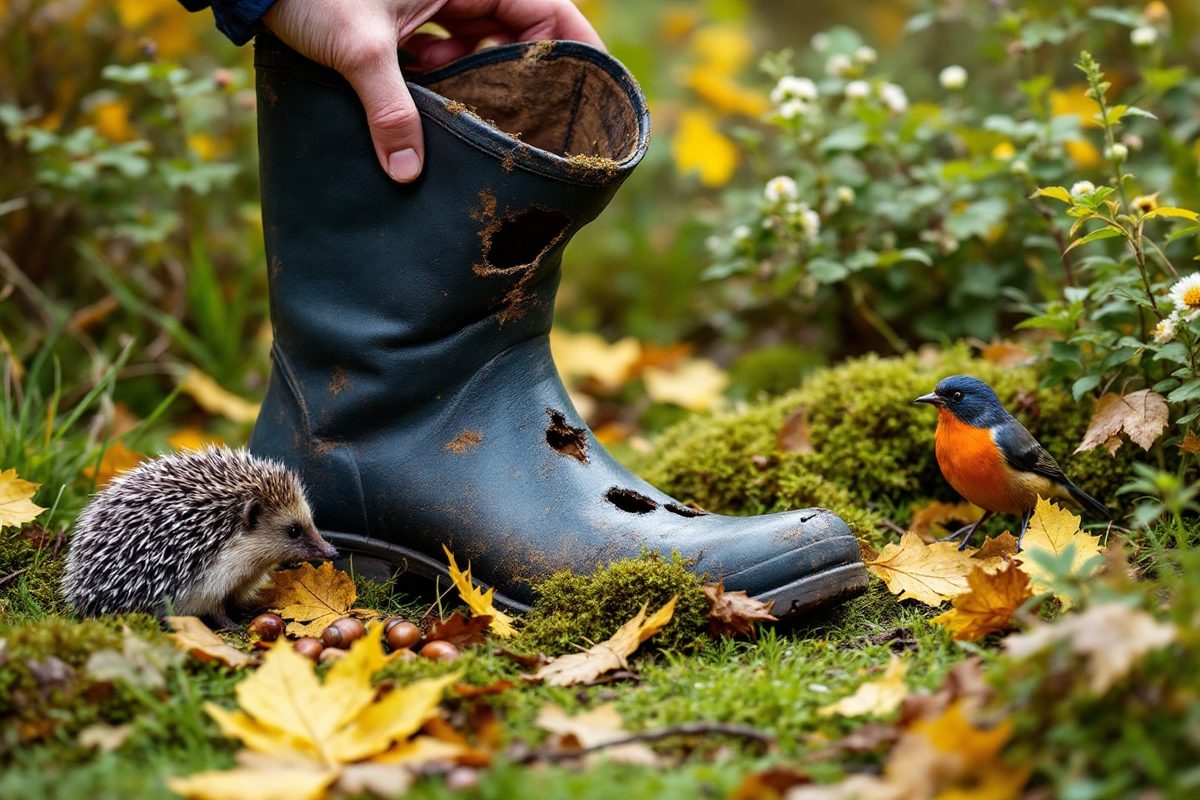
You know the feeling. It’s a misty morning. You step out in your favorite rubber boots. One of them is already leaking more than it protects. The old instinct is to toss them at the dump.
But what if that hole is actually a feature?
Old boots hold a secret power. They become water stations for garden wildlife. In the orange light of autumn, they create a quiet, poetic scene. It’s a joyful bet for smart gardeners. Transform worn utility into living surprise. Give your local biodiversity a perfect autumn.
Why Old Boots Are the Ultimate Eco-Project
Giving objects a second life is no longer just a buzzword. It’s a mantra for homes watching their wallets and the planet. A holey boot tells a story. It witnessed walks. Harvests. Kids’ games. Its rubber folds hold a thousand memories.
Throwing it away isn’t an option.
Every reuse gesture lightens the trash load. It softens our daily footprint. Autumn makes this easy. Leaves hit the ground. The air cools. Nature slows down. It’s the perfect season for creative eco-initiatives.
Handy crafts move indoors, but the desire to cozy up extends to the yard. Crucially, this is when animals seek water and shelter. They are preparing for the first cold snaps. You are providing a lifeline.
Creating a Mini Tavern for Garden Visitors
Natural puddles are vanishing. Abandoned tubs are rare. Every mini water point in the garden becomes an eldorado.
Obirds. Hedgehogs. Squirrels. These feathered and furry acrobats need clean, accessible water. Boot drinkers are ingenious. They are simple. They work in any outdoor space.
Installing a boot waterer opens a small country tavern. Morning birds look for freshness. Nighttime hedgehogs quench their thirst. Timid hedgehogs from the hedges pause safely before continuing their adventures.
The gesture is tiny for us. Huge for our neighbors with wings and paws. Whether you are in a city apartment or a sprawling countryside estate, you are enriching the local ecosystem.
How to Build a Boot Waterer (Step-by-Step)
Before you start, gather your gear. You don’t need much.
- One or two old boots (rubber or faux leather)
- A sponge for cleaning inside and out
- A flat pebble or some gravel for the bottom
- Pruners or a utility knife (if edges need trimming)
- Eco-friendly paint or non-toxic markers (optional)
The Construction Process:
- Clean thoroughly. Remove all dirt and chemical residues. This is non-negotiable for animal safety.
- Stabilize the base. Place a flat stone or gravel at the bottom. If the boot is leaning, this keeps it upright.
- Manage drainage. Keep or enlarge the existing hole. It allows excess rainwater to escape. It maintains a safe water level.
- Fill with water. Add fresh water. Refresh it regularly.
That’s it. The core function is done.
For a decorative touch, paint them. Use bright colors. Add forest motifs. Draw nature symbols. Stimulate imagination. Add poetry to the yard. Why not have kids paint ladybugs or autumn leaves? It inspires neighbors too. A strange, wonderful inn for the garden.
Maintenance and Safety Secrets
One golden rule attracts wildlife without harming them. Keep the water clean and fresh.
Replace the water every two to three days. Do it more often during heatwaves or heavy rain. Clean the boot with a soft brush and plain water.
Avoid detergents completely.
Rinse abundantly. This prevents skin irritation and ingestion of toxins.
Positioning matters. Choose a shady but visible spot. Keep it away from direct cat access or predator routes. Avoid high-traffic human areas to keep the wildlife relaxed.
Elevate the boot slightly if needed. Surround it with stones. This prevents accidental drowning for small animals. It allows easy access for all sizes.
Regular water changes stop mosquito proliferation. It’s an easy fix with a little attention. Your old boot is now a vital resource. The animals know it. They will return.
Which animals visit a garden water source?
The early birds get the worm, but in your garden, the first drinkers are the tits, robins, and sparrows. They spot clear water immediately. Wait until dusk. Then the hedgehogs arrive. Quietly. They know better than to make a scene.
Young squirrels are next. They are curious. They test the stability of the boot. If it tips, they leave. If it holds, they drink.
These animals stay because you offer them water. Ponds dry up in summer. Frost threatens in winter. Your setup becomes a lifeline.
Why timing and location matter
Location changes everything. Species vary by region. You might see a nuthatch. A dormouse. A pine marten creeping in for a quick sip.
Time of day dictates the crowd. Dawn and dusk are for the bold. Mammals. Nocturnal visitors. Midday is for passerines. Small birds. They come when the sun is high.
This simple setup slows you down. You stop. You watch. You hear the small rustles of nature waking up.
How to share this DIY project
Don’t keep it to yourself. Share the idea.
Involve children. Involve neighbors who still have a childlike wonder. Turn it into a weekend activity.
- Transform old boots together.
- Challenge friends to be creative.
- Document the first animal visits.
This builds respect for life. It sparks conversations about biodiversity.
What else can you upcycle?
Boots are just the start. Look at your junk.
Broken teapots. Holes in pots. Watering cans with no spout.
Any container that holds water works. Creativity is the only requirement.
You can make feeders. Caches. Insect hotels.
Even a small patio garden can become a mosaic of unexpected refuges.
This is not just about recycling old objects. It is about changing how you see autumn. It turns forgotten items into life-support systems.
It attracts two-legged and four-legged visitors.
It is a poetic, ecological act.
Anyone can do it.
The question remains. What will you fill with water today?