Every fall, when the leaves turn brown and the evenings get longer, a quiet battle begins in French vegetable gardens. Many gardeners, even experienced ones, don’t realize it. One simple oversight can turn your precious patch of dirt into a sterile desert by spring. Why does the soil lose its fertility with the first cold snap? What simple steps can prevent this disaster? This season, an ancient habit brought back to the forefront could mean the difference between vibrant life and dead ground.
Why Your Soil Is Already Vulnerable to Frost
Bare Earth Exposed to the Cold
As temperatures drop, the soil is exposed far more than it seems. A plot left bare, without protection, takes the full hit from freezing, heavy rain, and wind. This nakedness makes the soil incredibly vulnerable. We often forget that soil is a living organism. It is filled with countless tiny creatures and microorganisms that keep it alive. But with the first frosts, their fragile balance is threatened. Without a “blanket” to protect them, they die off.
The Hidden Costs of Leaving Ground Bare
Leaving a plot bare opens the door to every garden problem. Water runoff washes away nutrients. Erosion sets in. The soil structure collapses little by little. Winter rains compact the earth. They cool it to the core. They destroy all biological activity inside. Come spring, you might find a hard, concrete-like surface where nothing grows without immense effort. Saving your garden starts in winter. Do it before the ground freezes.
Mulching: An Ancient Habit That Protects and Feeds
How Mulching Creates a Natural Shield
Nature has already planned everything. You just have to not get in the way of its genius. Mulching is simple and effective. It returns to the heart of smart gardening practices. It involves covering the earth with a layer of organic material. This forms a real shield against cold, excessive moisture, and erosion. The soil stays warmer. It retains humidity. Its structure remains intact. Fertility is preserved. Underground life survives.
Secrets of Traditional Gardeners for Living Soil
In the countryside, this mulching habit isn’t new. In the past, we covered fields and gardens with dead leaves, hay, or even pine needles. We used what the land provided. Old-timers understood that protecting the earth also feeds it. And feeding it means better harvests later. The return of mulching isn’t a passing trend. It is a long-standing peasant tradition tested by time.
Microorganisms and Earthworms: Discreet Allies to Pamper
Underground Life Depends on Protective Cover
When soil temperature drops, a real drama plays out under our feet. Essential organisms slow down. Earthworms. Beneficial bacteria. Fungi. Their activity slows, sometimes disappearing entirely. By denying them the cover of mulch, you let their habitat dry out. They suffer thermal shocks. They erode. A sterile soil is nothing more than a ground where these small workers have left or died.
Mulching Invites Biodiversity Underground
Spreading mulch creates a welcoming microclimate. The temperature stays stable. Humidity is held back. The decomposing organic matter feeds this whole world. Biodiversity explodes. The soil becomes much more alive and productive. No need for chemical fertilizers. No heavy spring work. The abundance soil is built patiently during winter.
Which Materials to Prioritize? The Match of Best Mulches
Garden Waste, Bought Mulch, Recycled Solutions
There are mulches for every taste and budget. Here are options for an ecological and effective garden:
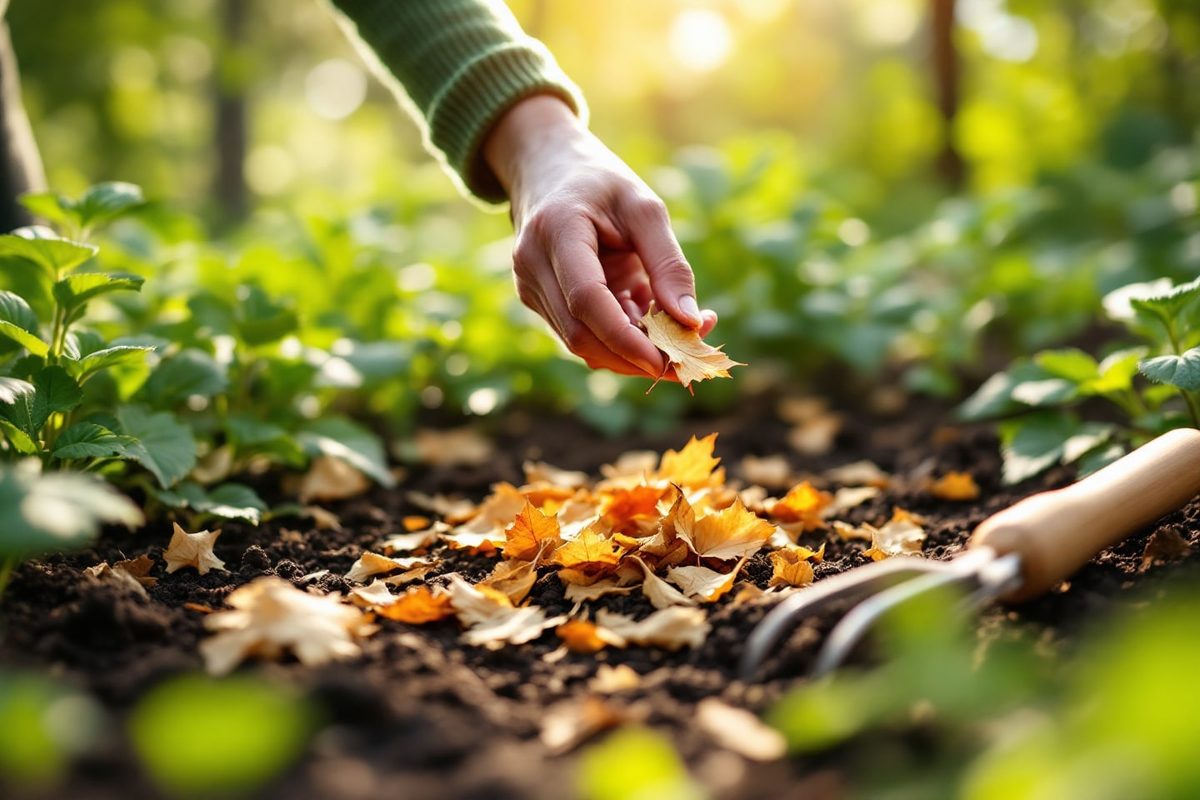
- Dead leaves : Abundant in autumn. They decompose quickly and enrich the soil with humus.
- Straw or hay : Ideal for vegetable patches. They keep heat well but may contain unwanted seeds.
- Grass clippings : Perfect for market gardens. Let them dry a bit to avoid fermentation.
- Branch chips : Material from pruning. Excellent for long-lasting mulch.
- Mature compost : Feeds and protects at the same time. It’s true black gold.
- Commercial mulch : Bark, cocoa shells, hemp. Often aesthetic and durable.
There are even unusual alternatives. Unprinted cardboard. Flax shreds. Pine needles for acidity lovers.
Beginner Mistakes to Avoid for Real Protection
Some precautions are needed so good intentions don’t become a headache.
- Never use diseased or infested materials. No diseased rose leaves. No grass with weed seeds.
- Avoid layers that are too thin. They decompose before protecting. Aim for 5 to 10 cm minimum thickness.
- Prefer raw organic matter over plastic mulches. Plastic isn’t good for soil life.
Good mulch must be aerated. Not packed down. Adapted to each zone of the garden.
Winter is coming. If you haven’t mulched yet, the window is closing. This isn’t just about keeping weeds down. It’s about insulation. The soil needs a blanket before the ground freezes solid. Once that earth turns to ice, your mulch loses most of its protective power. You have to beat the cold snap.
Timing and Thickness: The Rules of Engagement
You need to move fast. Wait until after your last harvest. The soil should still be workable and moist, but not sludge-like. If it’s frozen, you’re too late.
First, pull the persistent weeds. Leave the annual debris if it’s small, but remove anything that will rot or harbor disease.
Next, aerate the surface. Use a garden fork or a broadfork. Do this gently. You aren’t tilling. You’re just opening up the pores so water and air can penetrate the mulch later.
Now, apply the material. Aim for 5 to 10 cm of thickness. That’s about 2 to 4 inches. If you go thinner, the frost will punch through. Thicker is fine, but don’t bury your plants.
Keep the mulch away from stems and tree trunks. Piling it against bark creates a moisture trap. Rot sets in quickly. Fungi love that dark, wet environment. Give your plants a breathing room of an inch or two.
Tailoring Your Mulch to the Bed
One size does not fit all. Using wood chips on your lettuce bed is a mistake. It ties up nitrogen as it breaks down. Your plants will starve.
Vegetable gardens need fast-decomposing materials. Grass clippings are great, but use them thinly or they mat down and smell. Straw is a classic choice. Hay works too, but watch for seeds. These materials break down quickly, feeding the soil microbiome while it insulates.
Ornamental borders can handle the heavy stuff. Bark nuggets and wood chips look good. They stay put in the wind. They last for years. This is less about immediate nutrition and more about moisture retention and aesthetics.
Fruit trees and shrubs benefit from coarser materials. Leaves, pine needles, or chipped branches. You want to block the light from reaching weed seeds. You also want to reduce competition for water.
Mix it up. Don’t stick to just one type. A blend of leaves, straw, and small twigs creates a complex structure. It supports different types of micro-organisms. That diversity strengthens the soil matrix. It makes the earth more resilient.
Spring Results: Why Protection Matters
Winter mulching isn’t passive. It’s active preparation. Under that layer, biology doesn’t stop. It slows down, but it keeps working.
When spring hits, that protected soil is different. It’s not baked hard by winter winds. It’s not waterlogged from rain running off the surface. It’s crumbly. Dark. Alive.
Planted vegetables come up faster. Roots encounter less resistance. You might see a yield increase of up to double in some cases. That’s not a guarantee. It’s a strong possibility driven by reduced stress and better nutrient availability. You’ll water less. You’ll fertilize less. The soil holds what you give it.
Signs Your Winter Strategy Worked
How do you know if the effort was worth it? Walk the garden in late March or early April. Lift the mulch back.
Look for earthworms. Lots of them. They are the engineers of healthy soil. Their tunnels aerate the ground. Their castings add nutrients. If you see them near the surface, you’ve done well.
Smell the dirt. It should smell like a forest floor. Earthy. Sweet. Not sour or anaerobic. If it smells bad, the layer was too thick or wet. Adjust next time.
Test the texture. Grab a handful. It should be loose. Not clumped. Not dusty. If it’s hard to pull apart by hand, the structure is still compacted. If it falls apart easily, you’re in good shape.
Watch the growth. Spring crops will shoot up with vigor. Tomatoes and peppers establish roots faster. The head start matters.
The Long Game
This isn’t a one-time fix. It’s a habit. Covering the bare soil in late autumn is one of the simplest things you can do. It prevents erosion. It keeps temperature fluctuations in check. It feeds the unseen life below the surface.
You don’t need fancy equipment. A rake and some leftover yard waste are enough. The payoff comes in June, July, and August. The plants are stronger. The soil is deeper. The work feels easier because the earth is alive, not dead.
Start small. Do one bed. See what happens. Then expand. The cycle repeats. And next winter, you’ll be ready.