Spring arrives with a familiar rhythm. The buds open. The grass greens up. And so do the weeds. If you are tired of spending your weekends pulling dandelions or buying chemical sprays that promise miracles but deliver nothing permanent, stop. Gardening shouldn’t be a chore. It shouldn’t drain your wallet. There is a better way. It is ancient. It is effective. It works with nature instead of against it.
Why Commercial Herbicides Are a Waste of Money
Walk into any garden center in March. The shelves are stocked with colorful bottles. They promise effortless perfection. The marketing is seductive. You buy the product. You spray the weeds. The leaves turn yellow. They die. You think you have won.
This victory is an illusion.
Chemical herbicides rarely kill the root system. They burn the surface. They leave the base of the plant intact. Even worse, they create an ecological vacuum. Nature abhors a vacuum. With the help of spring rains, new weeds rush in to fill the empty space. They grow back stronger. The more you spray, the worse it gets.
It is a vicious cycle. You are not solving the problem. You are fueling it.
The Hidden Cost to Your Soil Health
There is the financial hit. Those repeated purchases add up. That money could buy better plants. It could buy durable tools. But the real damage is to the ground beneath your feet.
Strong chemicals disrupt the microbiological balance of your soil. You are trying to kill a few weeds. In return, you sterilize the earth. You kill the microfauna. This tiny life is essential for fertile ground.
Once that balance is broken, the soil becomes compacted. It turns hard and lifeless. Only the toughest, most invasive weeds—like bindweed and thistles—can survive in that dead environment. You spend money. You destroy the richness of your garden. It is a net loss.
The Free Solution Already in Your Garden
Stop looking at the store. Look at a forest.
Do you ever see someone weeding a forest? No. Why? Because the ground is never bare. It is constantly covered. Leaves. Twigs. Decaying matter. The soil is shielded from the sun.
In your garden, the enemy is exposed earth. When sunlight hits bare dirt, weed seeds wake up. They germinate. They take hold. The solution is simple. Cover the soil. Mimic the forest. Do this before the weeds appear. It is preventive. It is less tiring than reacting.
The Power of Mulching
The secret word is mulching. It sounds technical. It is not.
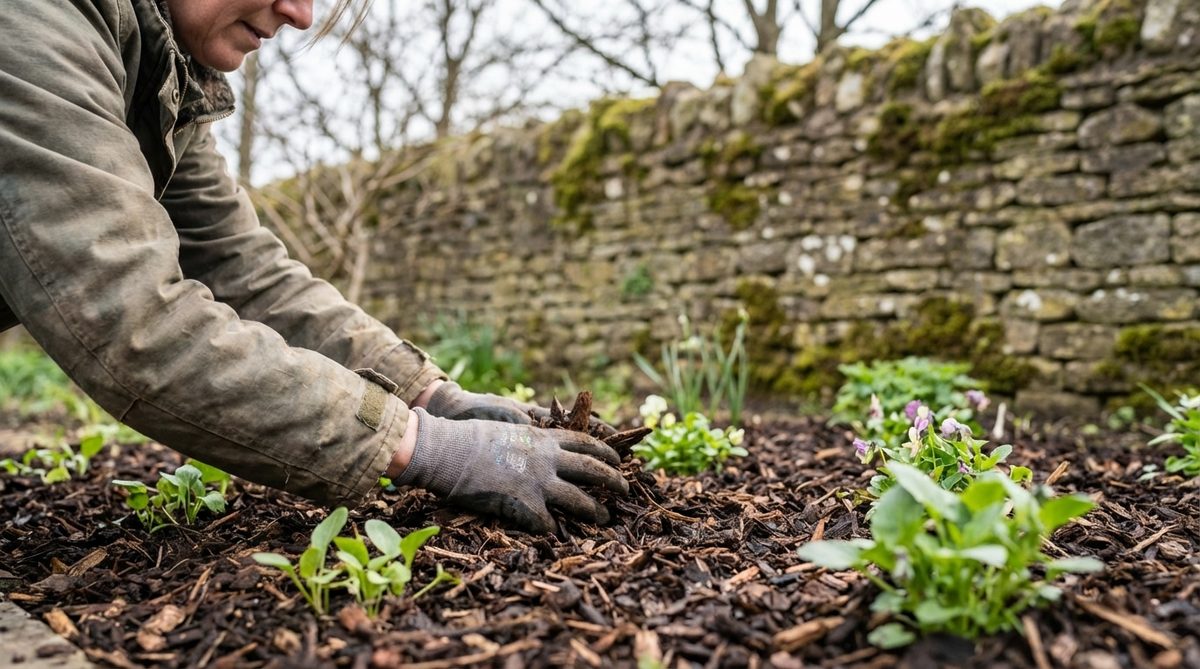
Mulching is just covering the soil with organic material. It creates a physical barrier. It does not attack the plants. It changes the environment.
When spring warms the ground, it is the perfect time to install this protection. It respects the garden’s natural equilibriums. It is free if you use what you already have.
Shredded leaves. Grass clippings. Wood chips. Compost. These materials form a mat. This mat blocks sunlight. It keeps moisture in. It suppresses weeds without poison.
“In your garden, the principal enemy is bare earth. The trick is to cover the soil before weeds even appear.”
This method is not just cheaper. It is healthier. Your soil regains its life. The microfauna returns. The earth loosens. You stop fighting. You start building.
The cycle breaks. The weeds fade. You save time. You save money. You get back your weekends.
It starts with a layer. Just a few inches of organic matter. Spread it out. Press it down. Walk away.
Let the earth do the work.
How plant-based mulch starves weeds out
Chemical herbicides have a bad reputation for good reason. They’re messy, expensive, and often just a temporary fix. The alternative isn’t magic. It’s biology. When you switch to a vegetative carpet—mulch—you change the battlefield. You aren’t poisoning the soil. You are simply changing the rules of engagement for whatever wants to grow.
Blocking light to stop germination
Every plant, whether it’s your prize roses or a stubborn dandelion seed, has one non-negotiable need: light. No light means no photosynthesis. No photosynthesis means no energy.
When you lay down an opaque layer of mulch, you cut off that power source. Weed seeds might sit dormant in the soil for years, waiting for a signal to wake up. But without light, that signal never comes. If a seed does manage to sprout and push through the thick barrier, it exhausts its limited energy reserves trying to break the surface. It dies. The weed never gets a chance to establish roots. You stop the invasion before it begins.
Retaining moisture to favor crops
This is the second major benefit, and it’s arguably more practical for the DIY homeowner. Mulch acts as an insulator.
Spring winds and early sun can bake the top layer of soil into a hard crust. That crust cracks. Water evaporates into the air before your plants can use it. Mulch prevents this. It keeps the moisture locked in the root zone.
Your cultivated plants get a steady supply of water. Weeds, which often thrive on erratic moisture and thermal shocks, struggle in this stable environment. Plus, you water less. In regions where water is becoming scarce, this is a massive win for both your wallet and the environment.
Turning waste into resources
Most people look at yard waste and see trash. You need to see it as raw material.
Stop throwing away your clippings.
Grass clippings from spring mowing are a goldmine. They are rich in nitrogen and hold water well. But don’t apply them wet. If you pile wet grass thickly, it ferments. It smells bad. It can mat down and suffocate what’s underneath.
Let the clippings dry for a day or two in the sun. Then, mix them with dry leaves from the previous autumn. Or combine them with woody debris from bush trimmings. Shred the branches with a chipper or cut them small with shears. That woody material adds structure. It creates a durable mulch that lasts around perennials and hedges.
Using cardboard for a clean start
If you’re starting a new bed in an area that’s already choked with weeds, skip the trowel. Skip the tilling. Tilling just brings more weed seeds to the surface.
Use brown cardboard.
Lay it down directly on the grass. Make sure it’s plain brown cardboard with no ink or tape. Layer it thickly. Then cover it with organic mulch. The cardboard blocks all light. It’s a physical barrier that weeds can’t penetrate.
Earthworms love this. They move down through the wet cardboard, pulling it into the soil where it decomposes. You’re feeding the soil structure while killing the weeds. It’s a core principle of lasagna gardening and it works without any heavy machinery.
The thickness rule: don’t skimp
The most common reason mulch fails is because the homeowner didn’t use enough of it.
A thin layer of straw or a few handfuls of leaves is useless. Light slips through the gaps. Weeds find those gaps and push through.
You need density. Aim for at least 10 centimeters of thickness after settling.
That’s about 4 inches. It sounds like a lot. It feels like a lot. But organic material compresses. It settles. It decomposes. If you can see the soil through your mulch, it’s too thin.
Maintenance and renewal
Organic mulch is not a “lay and forget” solution. It’s alive. Microbes, fungi, and worms are eating it. Over time, the layer gets thinner.
Check it in the spring. Add fresh material to areas that have become sparse during winter. In the heat of summer, decomposition speeds up. A top-up of dried grass or leaves can help maintain the barrier.
Keep that cover thick. Keep that soil dark. The weeds will stay out.
Is it worth the effort? The backache? The hauling?
Maybe you’ll find yourself standing over a bed of black plastic, wondering why you ever did that. Or maybe you’ll just enjoy the silence of a weed-free garden while your neighbors battle another chemical runoff.
The choice is yours. But biology usually wins.
Here is the real payoff. You are not just cutting down on weeding. You are feeding your garden from the ground up.
Breaking Down Mulch for Seasonal Fertility
Think of straw, leaves, wood chips, and grass clippings as slow-release fertilizer. They do not sit there doing nothing. They break down. As they rot, they release nitrogen, carbon, and potash right into the root zone.
This is not a chemical blast. It is a gentle feeding.
Chemical fertilizers often wash away, polluting groundwater with excess nitrates. Organic mulch avoids that mess. It builds humus. That dark, crumbly matter is the gold standard for soil health. Your dirt becomes loose. It holds water better. Plants get stronger. They resist disease because their roots are in healthy soil.
“Organic mulch builds humus, creating loose, fertile soil that supports disease-resistant plants.”
Worms and Microbes: The Invisible Workforce
Underneath that thick layer of organic matter, a party is happening. It is underground. It is busy.
Earthworms love it here. Sunlight cannot reach them. Predators cannot get them. They move up through the mulch, eating dead plant matter. Then they push it down into their tunnels.
This is better than any tiller. Tilling damages soil structure. Worms build it. They create channels for air and water.
Bacteria and fungi join the party. They form a network. This mycelial web helps plants access nutrients. By mulching, you are not doing all the work yourself. You are hiring an invisible army. They work day and night.
Stop Buying, Start Layering
This strategy changes how you view your yard waste.
Stop bagging it up. Stop hauling it to the curb. Spread it out.
Piles of green waste are not trash. They are resources. Spread them thick around your plants. It saves money. It saves your back from bending over. Your garden will look better and grow faster.
Before you drive to the home center this weekend, look around. What is already there? Leaves on the lawn. Clippings from the last mow. Use it. Cover the bare earth. Let nature handle the heavy lifting.