
When you think of a swimming pool, you think of a chlorinated rectangle. Maybe a wave pool at a local park. Those are all good things. It’s practical. But there is nothing extreme about them. We are talking about a multi-million dollar pool. Even billions.
These are not just features of water bodies. They are destinations. Developers build them to appeal to people looking for the latest, most ridiculous luxury experiences on the planet. It’s amazing how many are open to the public. You can swim in it. You can pay for the privilege.
So why does it cost so much? It’s rarely just digging and filling with water. It’s about technology. Deep water requires extensive structural planning. It’s all about the materials. Marble, 24-karat gold tiles and intricate mosaic work. It’s all about functionality. water slide. fountain. Complex control systems are more expensive than houses.
What can you build with a $2 billion budget? Let’s start with the biggest one.
10: San Alfonso del Mar
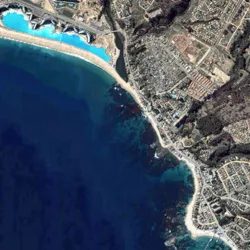
Algarrobo is located on the south coast of Chile. This is a resort town. This is San Alfonso del Mar. This place changed the way the world looks at pools.
The water is large, so you can also sail a boat. Swim the entire 0.8 mile distance. That’s 1.3 kilometers. The area is more than 20 acres. In 2008, it was recognized in the Guinness Book of Records as the world’s largest swimming pool. That’s 6,000 times the size of an average hotel pool.
The construction took five years. price tag? Almost $2 billion. This is equivalent to about 1.1 trillion Chilean pesos.
Developers use certain techniques to achieve this. Crystal Lagoons develops an innovative saltwater filtration system. Purifies over 66 million gallons of seawater. This pool opened in 2007. It is part of a larger resort with thousands of apartments and hotel rooms.
Is it open to the public? No. Must be a guest or resident. However, access is unlimited.
9: Seagaia Ocean Dome
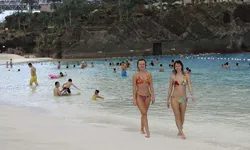
2 billion dollars in summer disguised inner beach
Japan’s Sheraton Miyazaki Resort spent $2 billion to solve its cold problem. It was opened in 1993. The building has the world’s largest indoor swimming pool, a feat of engineering that allows you to escape the cold even in Japanese winters.
The highlight is the Ocean Dome. It is about 1,000 feet long and 328 feet wide. It’s amazing. The entire area is under a retractable roof. Do you want sunshine? Open it. Do you need sunscreen or weather protection? Close it. The beach itself is not sand. It’s crushed quartz. It feels different underfoot. Real sand has grit. Quartz is smoother. Cleaner, maybe, but less natural.
The show doesn’t end in water. The artificial volcano erupts every 15 minutes. Lava flows down the sides. This is dramatic. It’s noisy. It’s meant to distract you from the fact that you’re in an incubator. The pool is cleaned several times a day for use by surfers. These machines make waves. you catch them. Then the pool is emptied or allowed to settle for the family’s use. There is a separate area for children. water slide. smaller droplets.
It was a financial gamble and almost killed it. The resort is on the verge of bankruptcy. Ownership changed hands. It was closed indefinitely in October 2007. They needed to restructure. The renovation project is huge. It wasn’t just a paint job. It was an attempt to survive. The premises have been reopened, but dream of a permanent indoor beach is fragile. It requires continuous funding. Continuous maintenance.
Dive deep: Nemo 33 in Brussels
If the beach represents a surface wonder, Nemo 33 in Brussels represents vertical depth. It was opened in 2004 and took seven years to build. The price is more than 3 million dollars. A small fortune for a hole in the ground. But the hole goes down.
At 108 feet deep, Nemo 33 has the world’s deepest artificial pool. Most residential pools have a maximum height of 10 feet or 12 feet. It is nine times deeper. It holds 660,000 gallons of water. That’s 2.5 million liters. The pressure at the bottom is significant. The environment is under control.
The pool isn’t just a tank. It has underwater tunnels. Rooms. Obstacles. It is built for exploration. You can swim down, enter a chamber, and look out through glass. It mimics the feeling of being underwater without the open ocean.
Who uses it? Scuba divers. Film crew. If we had to shoot a scene where someone was underwater, we wouldn’t build a lake. You go to Nemo 33. It is safe. It is clean. Repeatable.
It is a training ground for ordinary people. Certified divers can rent a space for about $30. It is affordable for what it is. You can also take courses. Learn to dive safely. The water is very clear. Visibility is excellent. It is a unique facility in Europe. Few places offer this depth for non-professionals. It requires certification. it demands respect
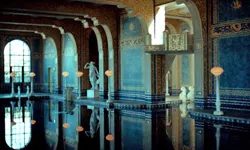
Hearst Castle in California is more than just a hilltop. There are perhaps two of the world’s most famous swimming pools dominating the landscape. Outside is the 104-by-58-foot Neptune Pool. Then there is a slightly smaller indoor Roman pool. It was built between 1924 and 1936. The entire property, including the pool and all the furniture, cost less than $10 million at the time. Currently, it is almost impossible to duplicate these facilities at any cost. It looks like an ancient Roman bath. The walls are lined with precious marble. The floor has an intricate tile mosaic.
The entire Neptune pool area, including the walls, ceiling and the pool itself, is covered with thousands of gold-inlaid mosaic tiles.
The Hearst family commissioned wonderful works of art for these spaces. The edges are lined with statues by Italian master craftsmen. There’s more here than swimming. It’s about immersing yourself in history. Visitors can visit this mansion all year round. Day trips are also available. Night tour. However, you cannot participate directly. Instead, the manor hosts charity auctions several times a year. You bid for the chance to spend the night in this property. Or swim in the pool. This is unique. And expensive.
Lev Leviev’s house
Move to North London. In 2008, Israeli billionaire Lev Leviev moved into Britain’s most expensive private home ever built. Location in North London. Construction costs were $68 million. If you’re into local currency, that’s £35 million. Inside is one of the most expensive private pools in the world.
This is indoors. The swimming pool is covered with golden tiles. We have a fully equipped spa. sauna. It’s a lot of metal and water. When Leviev wants to party, the pool changes. The retractable cover slides over the water. The space has been transformed into a opulent ballroom. immediately. No more swimming. Just dance.
Unfortunately for you and me, this pool is only open to friends and family. Therefore, do not cancel your Community pool membership just yet. You won’t be getting an invitation.
Gellert Hot Springs
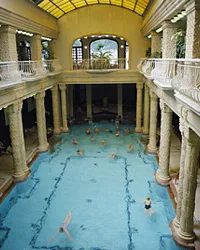
Gellert Baths: Budapest’s Art Nouveau Marvel
Budapest’s Gellert baths are a testament to the magnificent architecture of the early 20th century. Opened between 1912 and 1918, the facility is one of the oldest continuously operating public baths in the world. It is more than just a spa. A beautifully preserved Art Nouveau masterpiece.
Its scale is too large to ignore. The complex has several swimming pools that are over 7,500 square feet in size. There is a wave pool outside. There is a dedicated area for children. And inside, a luxurious Roman bath awaits you. What moves water? More than 100 hot springs feed the system. Locals and tourists alike believe that these springs have natural healing powers.
Step inside and you’ll appreciate the attention to detail. The walls are covered with fine marble. Mosaic tiles create complex patterns. Valuable works of art decorate the space. In hot weather, the retractable roof opens. Swimmers enjoy sunbathing in the atmosphere of a historic palace. The best part? It is open to the public. For a small fee, anyone can enjoy this luxurious swimming experience.
Zodiac Pool at Umaid Bhawan Palace
Fast forward to India. Umaid Bhawan Palace serves two purposes: a hotel and a royal residence. When it was completed in 1943, the manor held the title of the world’s largest private manor. This position was earned through hard work. It took over 15 years to build. More than 3,500 workers were on the payroll. Payment? It was worth more than $225,000 at the time, equivalent to 11 million rupees.
The highlight is the indoor swimming pool located deep underground. It is located in the middle of the building. This pool, known as the Zodiac, is circular. The design is strongly based on the classic Art Deco style. See below. The base is covered with mosaic tiles depicting 12 constellations. Look above you and around you. The walls and ceiling are covered with thousands of one-inch tiles. They are covered with gold.
Today, the line between public and private is blurred. Hotel guests can swim here. Members of the Indian royal family still live in the palace’s private wings. They often share the waters with visitors looking for history.
Sarojin Resort
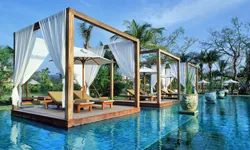
Sarojin: Phuket Coastal Revival
It didn’t start in paradise.
When Sarojin Resort near Phuket first opened in late 2004, it promised luxury. The World Travel Awards focuses on multi-million dollar hotels and has been named the most luxurious small hotel in Asia for several years in a row. However, the sea did not keep its promises.
The Asian tsunami hit.
The resort was destroyed.
Instead of continuing to close, the owners took immediate action. they rebuilt. Eight months later, the resort reopened. This speed helps attract visitors back to your site when you need it most.
Today, the infinity pool is the centerpiece.
It covers 25 square meters. It looks out over the Indian Ocean. Customers can relax in a lush tropical landscape or float in pavilions built directly into the water.
If you want luxury, book a massage on the pool’s floating table.
The view is spectacular. The service is refined. This is in stark contrast to the destruction once occupied in the same place.
Kitchukov Family Pool
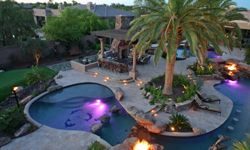
The focus shifts from Gilbert to the Middle East, where the definition of “backyard” is stretched to the point of absurdity. Crystal Lagoons is behind this new record. They are building in Sharm el-Sheikh, Egypt. The name of this project is City of Stars resort. It opens at the end of 2009. The pool is located on 21 acres of land. That is 8.5 hectares. It is one kilometer larger than the current largest swimming pool in the world. The complex will have more than 30,000 apartments and hotel rooms. Here you can enjoy boating. The total cost exceeds $5.5 billion. The equivalent in local currency is more than 30 billion Egyptian pounds.
This is not a one-time thing. The company plans to develop Soma Bay south of Cairo. This place has 18 interconnected lagoons. The area spans more than 30 acres. The price tag hits $12 billion. Crystal Lagoonss also has nearly 50 development projects. These go beyond the limits of expensive pool design. Their patented filtration technology makes these massive bodies of water possible.
Frequently asked questions
How much does it cost to maintain a luxury pool?
Maintenance costs vary depending on size, material and location. You can expect to spend anywhere from a few thousand dollars to tens of thousands of dollars a year.
What are the features of expensive swimming pools?
Infinite edges. Underwater speakers. Intricate mosaic designs. Artificial beaches. These add appeal and luxury.