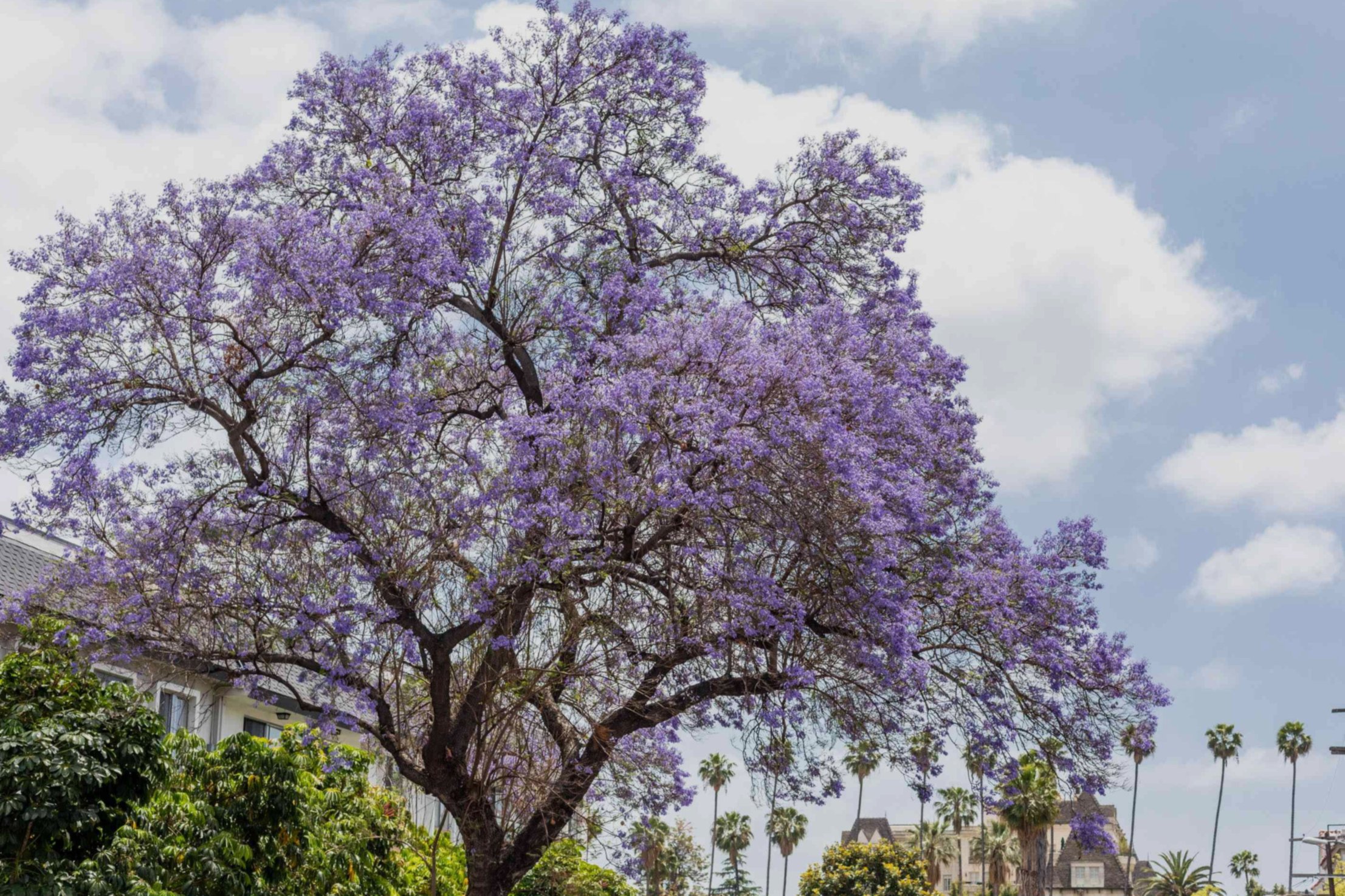
It explodes in color. Then it rots.
If you have a jacaranda in your yard, you know the drill. First comes the beauty. Jacaranda mimosifilia, native to South America, drops clouds of blue-purple trumpet flowers. They smell fresh, almost sweet, while they are on the branch. Once they hit the pavement?
Pungent. Foul.
You’ll be sweeping purple mush off your sidewalk and pool deck for weeks. But the visual payoff is undeniable. This is not a tree for the tidy suburbanite. It is a wild thing. A 25-50 foot beast that demands heat, sun, and drainage. 🌺
Where and How to Plant It
Full sun is non-negotiable. At least six to eight hours daily. Less light means fewer flowers. Maybe none at all.
Pick a spot wisely.
This tree has a secret flaw: weak wood. Surface roots that lift pavers. Branches that snap under their own weight in high wind. Do not plant this thing over a driveway. Or next to your pool. Or directly above a sidewalk.
Soil needs to drain fast. Sandy is ideal. Slightly acidic is better. If you have heavy clay, fix it or don’t plant it. Wet soil kills the roots. Rot sets in. The tree dies. Simple.
“Keep it in full sun and let the water run away quickly.”
Water and Feed (Without Killing It)
Here is the tricky part. These trees are moderately drought tolerant once established, but they still hate sitting in puddles.
Water deep. Not frequent sips. Soak the soil at the drip line—the outer edge of the canopy where roots drink—rather than pouring water on the trunk.
Check the dirt. If the top 4 inches feel dry, it’s time to water. Once a week in mild weather. Several times a week when the heat index spikes. Cut back to once a month in winter when the tree goes dormant.
Fertilize once a year. Use a balanced 10-10-4 mix. But listen closely. Avoid excessive nitrogen. If you pour high-nitrogen lawn fertilizer around the base of a jacaranda, you will get leaves. Lots of lush, green leaves. You will not get flowers.
Why do you think the flowers taste like money? Because nitrogen steals them away.
Cold Weather Is Not An Option
These trees are tropical. Hardiness zones 10 and 11.
A dip to 20°F? Maybe. A one-time surprise. A second frost? Dead trunk. Dead tree.
They handle heat well. Even humidity. But constant, brutal heat can cause trunk scald. Protection matters. Plant them near a house or wall for windbreak protection in coastal zones.
In colder zones (like Zone 9), you can try container growing. Keep the pot under 10 feet by pruning. Move it inside when frost hits. Prune it hard while dormant indoors. Don’t forget the winter dormancy. Water less. Let the soil dry out slightly. This stress actually helps trigger those massive blooms when spring returns.
Soggy winter roots? Few flowers. Dry winter roots? Purple rain in May.
Making More Jacarandas
Seeds. Cuttings. Grafts.
Seeds come in dry brown pods that drop in late summer. Soak them for 24 hours before planting. Germination takes 2-8 weeks. Wait eight months before moving seedlings anywhere.
Cuttings are faster.
Take a 3-4 inch stem from a healthy branch. Make a diagonal cut just below a node. Put it in water or sandy soil. Wait for roots. This method guarantees a clone of the parent. And yes, cuttings bloom faster than seeds.
Varieties matter if space is tight:
- ‘Bonsai Blue’ : Dwarf. Purple blooms. Stays under 12 feet. Good for Zone 9-11.
- ‘Alba’ (White Christmas) : Full size. White flowers. Can start blooming in April.
- ‘Maroon’ : Dwarf. Dark purple-magenta blooms. 10-25 feet tall.
Standard Jacaranda gets big. Like, shade-your-whole-yard big. 60 feet wide is possible. Measure your fence line twice.
Pests, Disease, and The Ugly Truth
Aphids and scale love jacarandas. Treat with horticultural oil or insecticidal soap.
The real danger is bacteria. The glassy-winged sharpshooter bug carries Xylella fastidiosa. This causes bacterial leaf scorch. It blocks the tree’s water transport system.
Once the leaves turn brown and crisp, the end is near.
There is no cure.
Root rot is the other killer. Mushroom fungi appearing at the base? Peel back the bark. See white fuzz? Black rot? That’s it. Remove the plant. Dispose of it. Do not compost it.
When Problems Arise
Yellow leaves usually mean one thing: not enough deep watering. The tree can’t produce chlorophyll. It gets chlorosis. Soak the root zone deeply and on schedule.
Browning leaf tips?
Could be too much sun. Could be too much fertilizer salt burn. Could be the bacterial disease. Check your water habits. Check your soil pH. Check the bugs.
Pruning? Don’t do much.
Young trees need a single central leader. Tie them to a stake if necessary for straight growth. After that, only cut dead, broken, or diseased wood. Heavy pruning creates weak suckers that grow straight up. Ugly structures that snap in the wind.
It is a high-maintenance reward system.
You sweep. You water. You wait for winter.
Then, in June, the sky falls in purple rain.