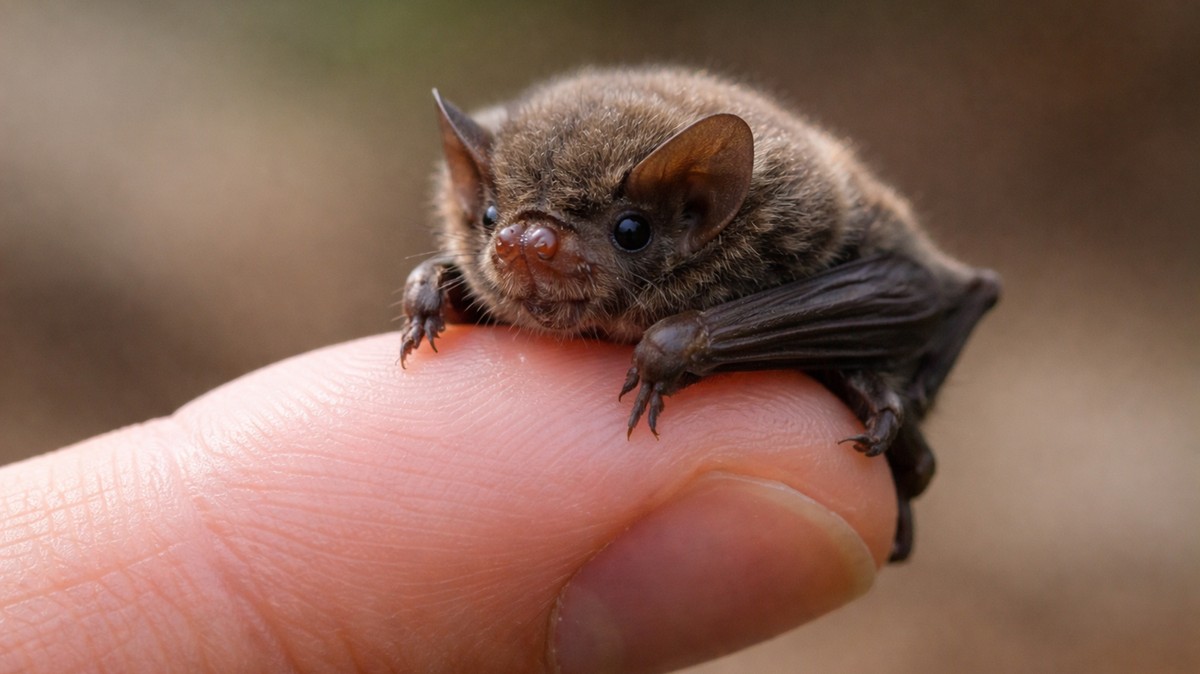
The smallest mammal on Earth isn’t a mouse or a shrew – it’s a bat so tiny it weighs less than a dime. Known as the bumblebee bat (Craseonycteris thonglongyai ), this incredible creature highlights the astonishing diversity within the animal kingdom and raises critical questions about biodiversity conservation in fragile ecosystems.
A Pocket-Sized Predator
At just over an inch long and weighing around two grams, the bumblebee bat earns its nickname. It’s roughly the size of a large bumblebee, but instead of buzzing through flowers, it navigates the darkness using echolocation. Its distinctive features include a pig-like snout, oversized ears, and tiny eyes hidden beneath its fur – adaptations that help it thrive in its unique environment.
The species was first scientifically described in 1974 and named in honor of Thai zoologist Kitti Thonglongya, underscoring the importance of local expertise in discovering and documenting the world’s biodiversity.
A Restricted Range and Rising Threats
The bumblebee bat’s existence is precarious. It lives exclusively in limestone caves along rivers in western Thailand and southeast Myanmar. Colonies are small, usually numbering around 100 individuals, and are geographically isolated – the Thai and Myanmar populations don’t interbreed. This limited habitat makes the species particularly vulnerable to environmental changes.
Why this matters: The bat’s range is so restricted that even minor disturbances can threaten entire populations. Deforestation, agricultural expansion, and even unregulated tourism within the caves pose serious risks. The IUCN currently lists the bumblebee bat as “near threatened,” but its long-term survival depends on effective conservation measures.
An Ecological Role in Miniature
Despite its size, the bumblebee bat is an efficient predator. It feeds on tiny flying insects, spiders, and other arthropods, playing a vital role in regulating insect populations. Like other bats, it hunts using echolocation, darting through forests at dusk and dawn to catch prey mid-air.
This predatory behavior is crucial for ecosystem health. Bats worldwide consume vast numbers of insects, including agricultural pests and disease vectors. The bumblebee bat, though small, contributes to this broader ecological function, demonstrating that even the smallest creatures can have a significant impact.
The Bigger Picture: Bats and Biodiversity
The bumblebee bat is just one of over 1,400 bat species found globally. These mammals range dramatically in size and occupy diverse habitats, from deserts to rainforests. Their ecological roles are equally varied: pollination, seed dispersal, and insect control.
The takeaway: The bumblebee bat serves as a stark reminder that biodiversity is often concentrated in small areas, and that protecting these fragile ecosystems is essential for preserving the planet’s natural heritage. Conservation efforts must focus on safeguarding limestone caves, surrounding forests, and the delicate balance of insect populations that sustain this extraordinary creature.