


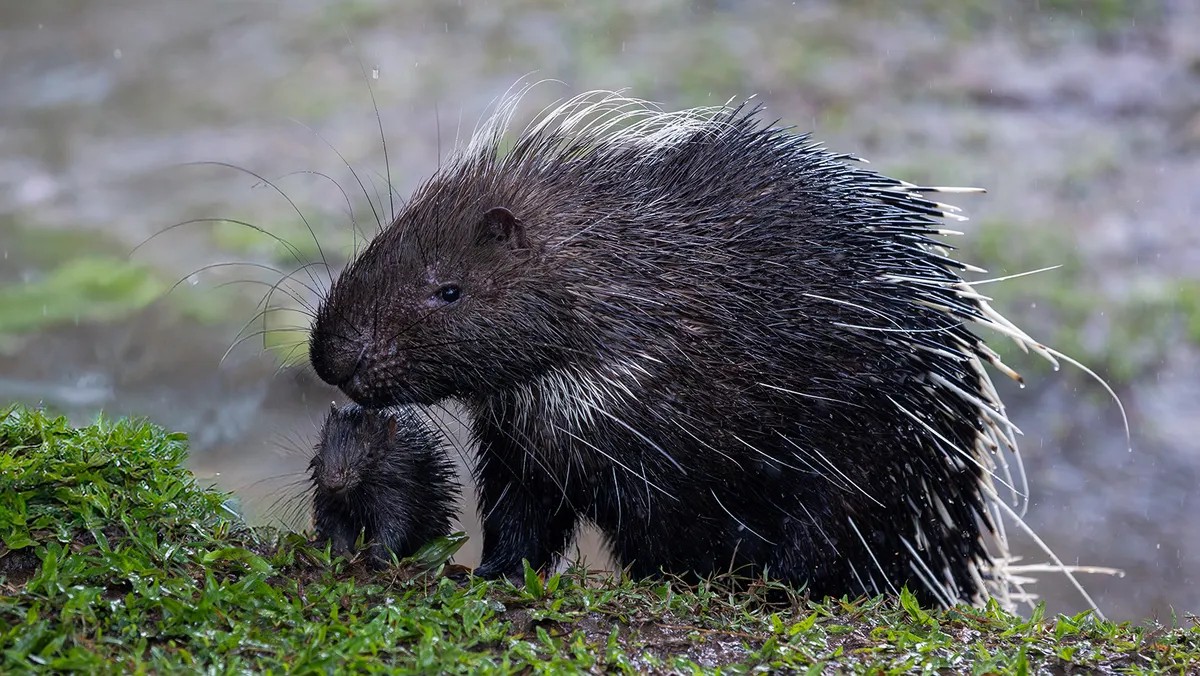
A group of porcupines is called a prickle—a fitting, memorable term that highlights the animals’ most distinctive feature: their formidable quills. Like a “murder” of crows or a “parliament” of owls, this collective noun sticks in the mind, conjuring an image of a spiky, cautious gathering.
The Biology of Defense
Porcupines are rodents equipped with modified hairs that serve as sharp, detachable spines. This adaptation protects them from predators, making them difficult targets. There are two main families: Old World porcupines (found in Africa, Asia, and southern Europe) and New World porcupines (including the North American species). While both rely on quills, their behaviors differ; Old World porcupines forage on the ground, while New World porcupines are skilled climbers.
Solitary Creatures in a Spiky Package
Despite their defensive capabilities, porcupines are generally solitary creatures. They forage alone at night, feeding on bark, leaves, and other vegetation. While they may occasionally den together for warmth during winter, large gatherings—a true “prickle”—are rare in nature. This explains why many people aren’t familiar with the group name.
The Appeal of Collective Nouns
The term “prickle” belongs to a wider category of collective nouns, which humanize animal behavior and add a touch of whimsy to wildlife descriptions. Other examples include a “pack” of wolves, a “school” of fish, or a “herd” of deer. Quirky terms like a “business” of ferrets, a “kindle” of kittens, or a “troop” of monkeys make animal facts more engaging.
These names aren’t just for fun. They’re used in nature writing, videos, and education to spark interest and create memorable associations.
The Lasting Impact of Language
Collective nouns enhance the charm of the English language, making conversations about wildlife more colorful and memorable. Whether officially recognized or fan-made (like a “squad of squid”), these terms add flair to discussions and social media posts. The term “prickle” is a perfect example of how language can capture the essence of a creature’s unique characteristics.
In short, a “prickle” of porcupines isn’t just a vocabulary quirk—it’s a vivid reminder of the remarkable adaptations and solitary nature of these spiky rodents.


