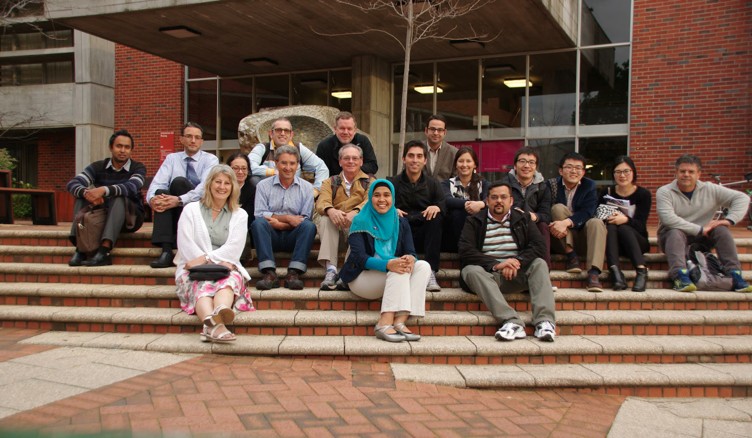
The 23rd annual International Group for Lean Construction (IGLC) conference, held in Perth, Australia, brought together researchers and professionals seeking to radically improve the architecture, engineering, and construction (AEC) industry. With 85 accepted papers from 16 countries, the four-day event, followed by a two-day PhD Summer School, explored cutting-edge approaches to construction management. This report summarizes the most significant insights from the conference.
Industry Day: Culture and Implementation
The first day focused on practical industry challenges. Laura Shepherd emphasized that successful culture change requires a “burning platform”—a compelling need for transformation. Organizations must recognize the necessity for change before adopting new cultural practices. James Barrett illustrated that implementing lean construction is not effortless, despite its apparent simplicity. As Paul Akers notes, lean is straightforward, but as Digby Christian points out, it is also the most challenging simple thing one can do.
Research Conference: Planning and Efficiency
The research sessions highlighted effective planning methodologies. Adam Frandson and Olli Seppanen presented on Takt Time and Location-Based Management Systems (LBMS), while Lauri Koskela’s comparative analysis suggested that LBMS, Takt Time, and Last Planner are most effective, outperforming Critical Path Method (CPM) and Critical Chain. Christine Pasquire’s research confirmed the growing global adoption of Last Planner, with most papers originating outside the United States. The takeaway? Combining LBMS and Takt Time with Last Planner can maximize production efficiency, though no single method suits all situations.
Integrated Project Delivery (IPD): Risk and Reward
The IPD session underscored the importance of aligned incentives. Glenn Ballard discussed a failed TVD project that exceeded its target cost by 6.4%, resulting in no profit for partners. The lesson? Shared risk and reward are crucial for success. Annette Schöttle demonstrated how Choosing By Advantages can improve team selection in tendering, while Doanh Do identified 15 misaligned incentives within TVD and IPD. Patricia Tillmann’s research showed how lean and BIM principles can streamline ETO component transitions, though challenges remain. The key takeaway: IPD thrives when stakeholders who impact the schedule share both risk and reward.
Research Highlights and PhD Summer School
The final days featured diverse research, including the author’s work on the Irish AEC sector. James Smith’s paper on Design Science Research (DSR) offered valuable guidance for researchers, while Matt Stevens examined how subcontractor workflow variability is affected by demand and concurrent contracts. Wenda Nofera presented innovative lean construction curricula from Michigan State University. The annual PhD Summer School, led by Dr. Vicente González and Dr. Paz Arroyo, provided ten students with expert feedback on their research methodologies, particularly DSR, which emphasizes practical industry contributions alongside theoretical rigor.
Conclusion
The IGLC 23 conference reinforced the need for continuous improvement in the AEC industry. Successful implementation of lean construction principles requires a clear understanding of cultural dynamics, effective planning methodologies, and aligned incentives within project teams. The event underscored the value of rigorous research and collaborative learning, setting the stage for future advancements in the field. The next conferences will be held in Boston, USA, and Crete, Greece, in 2017